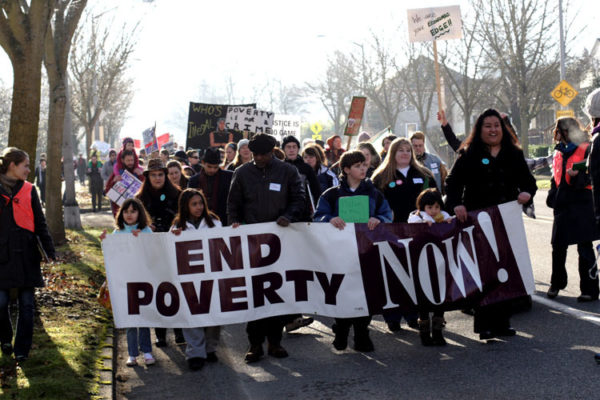
7 Myths Mainstream Media Needs To Stop Telling About Poverty

End-Poverty-in-America

Myth: The U.S. offers unparalleled opportunity to escape poverty.

America has far less social mobility than most comparable nations, including France, Germany, Denmark and Canada. Inequality in access to education, health care and home ownership has hardened class disparities. A 2006 study found that 42 percent of American men who grew up in the bottom quintile of incomes remained there as adults — a rate that’s much lower in other developed countries. According to a 2013 Hamilton Project report, “a child born to parents with income in the lowest quintile is more than 10 times more likely to end up in the lowest quintile than the highest as an adult.”

the-mis-education-of-the-negro

Myth: Education is the silver bullet for solving poverty.

A paper at the 2014 Federal Reserve Bank of Boston’s annual conference revealed that class is a far better predictor than education level of where someone ends up. In the study, rich people who dropped out of high school maintained their wealth as often as poor people who acquired college degrees remained frozen at the bottom of the income ladder. In fact, a college degree does not even guarantee a middle-class life: According to Mother Jones‘ analysis of census data, in 2012, more than 1 million people with bachelor’s degrees made less than $25,000 a year while working full time.


Still independent.

We hope this story was worth your time. For over 14 years, Atlanta Black Star has stayed Black-owned and independently run. We didn't get here by waiting on ad budgets that were never built to prioritize us. Our readers did that.

Corporate support for Black media has always been thin. Outlets like ours get roughly 1% of the $170 billion spent on U.S. advertising each year, and that margin is shrinking further as advertisers walk back the DEI-linked commitments they made in 2020. That's the backdrop. It's not why we're asking.

The wider picture isn't any steadier. Newspaper ad revenue has fallen more than 80% since 2005, and local newsrooms are closing at a rate of roughly two a week nationwide. When outlets go under, it's rarely the ones built to center a Black perspective from the ground up that get to stick around.

We know a request for support isn't why you came here. But without readers choosing to fund this work directly, the depth of reporting we can do at home and abroad shrinks along with everyone else's. If you're not in a position to give, that doesn't change how much we value you as a reader.

If you are able to, a recurring contribution does more for us than a single one-time gift, because it lets us plan the next investigation instead of just the next invoice. It takes about 30 seconds, no long form, no account. Thank you for continuing to support independent journalism and freedom of the press.

Back to top