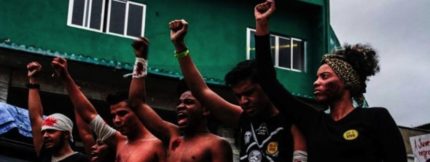
With a Black population of 75 million, Brazil has the second highest number of Black people in the world after Nigeria. The country has long boasted that it is free of racism because of a “racial democracy” that doesn’t see and acknowledge skin color. But behind that myth, the real story is much different.
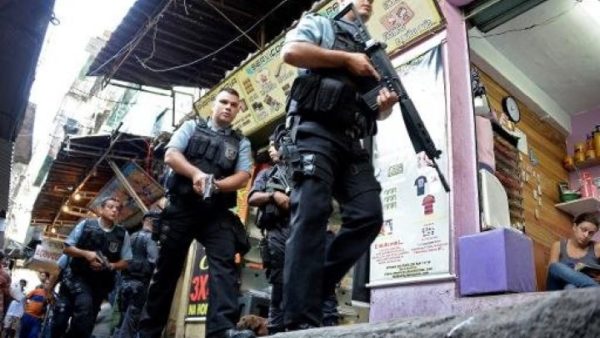
Police Killings of Black People Worse Than in U.S.
Though police killings of Black men have roiled the U.S. in recent months, the problem is actually much more rampant in Brazil. Brazilian police killed 2,212 people last year, according to a study by the Brazilian Forum of Public Safety, a national think tank, released last November. That’s an average of six a day. Between the Brazilian state and federal police violence, they have killed more Brazilians in the last five years (11,200) than did all U.S. police combined in the last 30 (11,090). The predominant targets of the Brazilian police are Black people. A 2009 study by economist Daniel Cerqueira found that twice as many Blacks as whites were victims of police violence. “Our police kill by the hundreds,” Ignacio Cano, a sociologist who specializes in the study of crime and police violence, told Bloomberg News. “We have a Ferguson every day.”
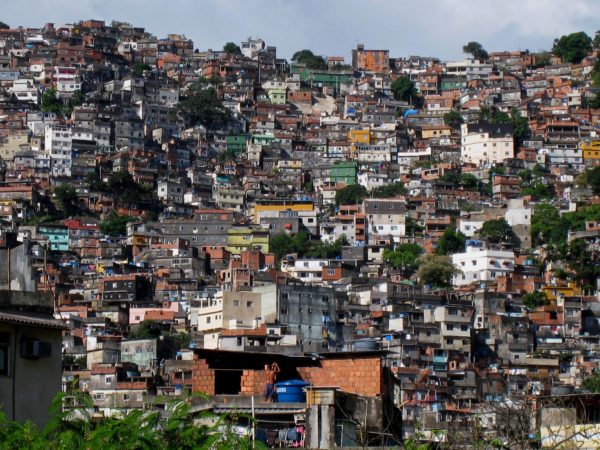
Rocinha favela, Rio de Janeiro
Black Brazilians Consigned to the Slums
In the 2010 census, 51 percent of Brazilians defined themselves as Black or brown, while nearly half said they were white. The average income of whites is more than double that of Black or brown Brazilians. More than half the people in Rio de Janeiro’s favelas (slums) are Black — while the comparable figure in the city’s richer districts is just 7 percent, according to The Economist. The favelas is where a large percentage of the police killings of Black people occur. Clearly, Brazilian society has been set up in a way that rewards white skin and punishes Blackness.