Her Dedication to Her People
As a college student, Shakur did not use her degree as an “escape valve” to distance herself from the mass of poor, oppressed and exploited people. Instead, she joined in the fight for their collective liberation. A group grew out of the mass movement in the United States that advocated for various forms of armed struggle as a way to bring about the freedom of Black people around the world. Shakur was part of this group, and as a result she and her comrades were targeted for prosecution by law enforcement, often framed and incarcerated under false pretenses.
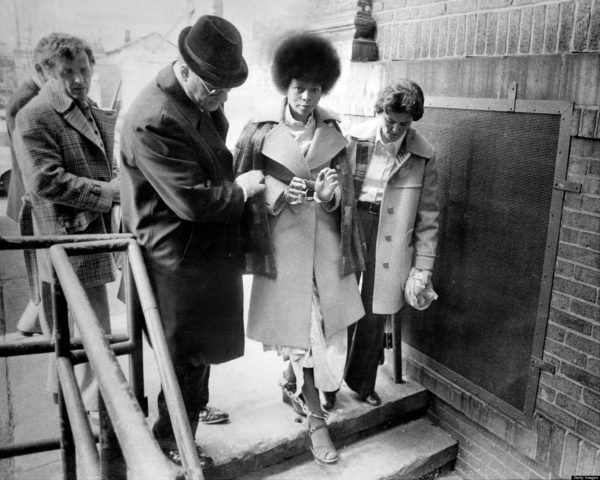
She Was Falsely Convicted
Shakur was falsely convicted of having killed New Jersey state trooper Werner Foerster on May 2, 1973. While driving on the New Jersey Turnpike, Assata, Zayd Shakur and Sundiata Acoli were stopped by state troopers, allegedly for having a “faulty tail light.” A shootout ensued where one state trooper killed Zayd Shakur, and another trooper, Foerster, ended up dead. Shakur was charged with both murders, despite the fact that the other trooper, James Harper, admitted he killed Zayd Shakur. Assata had been, following police instructions, standing with her hands in the air, when she was shot by Harper more than once, including a bullet to the back. Harper lied and said he had seen Shakur reach for a gun, a claim he later recanted. He also claimed she had been in a firing position, something a surgeon who examined her said was “anatomically impossible.” The same surgeon said it was “anatomically necessary” for her arms to have been raised for her to receive the bullet wounds she did, according to published reports. Tests done by the police found that Shakur had not fired a gun, and no physical or medical evidence was presented by the prosecution to back up their claim that she had fired a gun at Harper.