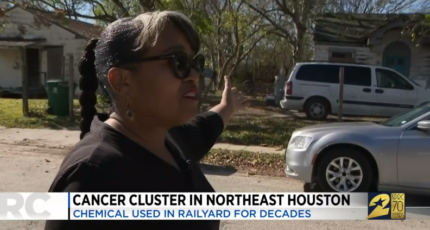
What exactly is environmental racism? It’s a policy or practice that differentially affects or disadvantages (intentionally or unintentionally) individuals, groups or communities because of their race and/or class. It has been well-documented around the world that environmental hazards often impact poor communities and communities of color disproportionately. Three out of every five African-Americans living well below the poverty line are also living in areas situated close to toxic waste sites, according to the federal government’s General Accounting Office. Living near these dangerous facilities has significant impacts on all aspects of their lives. Their air, water and food can all be affected; noise pollution and vibrations become a problem; the awful stench permeates everything; schools, workplaces and homes become unsafe places; and a multitude of different health effects can result.  The Tragedy of Chester, Pennsylvania
In the mind of Charles Lee, chairperson of the National Environmental Justice Advisory Committee to the Environmental Protection Agency (EPA), the story of Chester, Pennsylvania, is the worst case of environmental racism he has ever seen. Chester, a predominantly poor and Black community located just southwest of Philadelphia, is home to 42,000 residents and one of the largest collections of waste facilities in the country. One of Chester’s heaviest polluting facilities, the seventh largest garbage-burning incinerator in the nation, is located directly across the street from residential housing in Chester’s west-end. Although all the trash is burned in Chester, over half of the waste burned at the facility, known as the Westinghouse Incinerator, comes from all over the East Coast. In addition, Thermal Pure Systems, which was the largest infectious medical waste treatment facility in the nation when it was in operation, at one point brought in nearly three times as much medical waste as the amount produced in the entire state of Pennsylvania. The plant often left medical waste lying in the grass outside its boundaries, in public spaces where children were free to play. 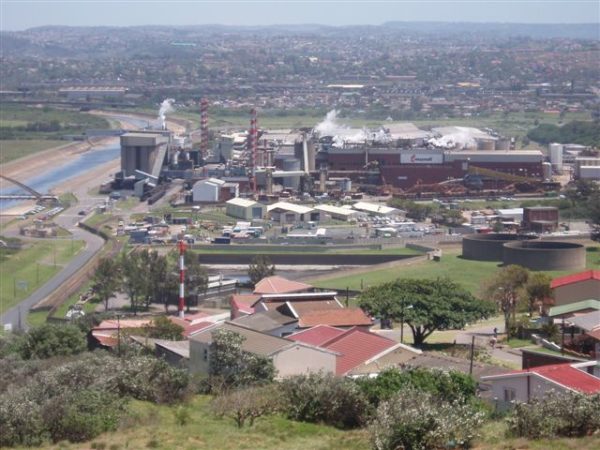 “Durban Poison” in South Africa
South Durban is the industrial hub of Durban, KwaZulu-Natal Province. It is home to one of the two biggest oil refineries in South Africa. South Durban has the largest concentration of petrochemical industries in the country, and it refines approximately 60 percent of South Africa’s petroleum. Apart from being overwhelmed with petrochemical companies, the South Durban industrial basin is also home to waste water treatment works, numerous toxic waste landfill sites, an airport, a paper manufacturing plant and a multitude of chemical process industries. In total, the South Durban area contains over 120 industries, including the two oil refineries. This petrochemical basin has been dubbed the “Durban poison” because it disproportionately overburdens low-income communities with environmental stress (pollution) and public health costs. Under the apartheid system, these toxic industries were located next to Black communities. The South Durban basin has a population of approximately 285,000 people, overwhelmingly Black communities. The development of South Durban as an industrial hub, starting in the 1930s, involved collaboration between local industrialists and the white government.