His Support for Respectability Politics
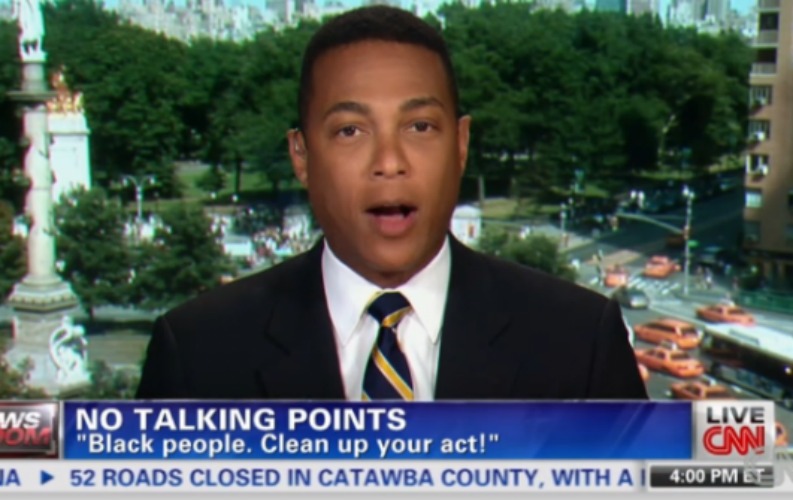
Back in 2013, Lemon listed five ways the Black community could start earning more respect and ultimately have a better chance at gaining equality in America. Among the reasons were to stop sagging their pants and stop saying the N-word. Immediately, the news anchor was chastised for his endorsement of failed respectability politics. Many argued that while they didn’t like “seeing kids wearing sagging pants and using the N-word either,” they also were well aware that “that’s not the real issue.” As BuzzFeed contributor Jesse Taylor explained, “Telling the ‘black community’ what it needs to do in order to become respectable isn’t brave truth-telling. It’s a way to shame black people into shutting up about the actual issues they face.” One reporter even pointed to the death of Jonathan Ferrell as a clear example of why respectability politics not only don’t work but also stem from racially charged generalizations about the Black community.
“Jonathan Ferrell did everything ‘right,’ ” The Nation’s Mychal Denzel Smith wrote of the 24-year-old former Florida A&M football player who was fatally shot multiple times by a police officer while he was looking for help after a car accident. “He got an education. He worked hard. He was engaged to be married. His crime was being in a car crash and seeking help. In the process, he was profiled as a burglar, shot and killed. No one sought to protect, serve or even listen to him. He had his humanity erased even after doing it all the ‘right’ way.”

Defending Stop-and-Frisk Policies
From government officials to scientific studies and surveys, there have been more than enough sources to conclude that stop-and-frisk policies disproportionately target the Black community, but Don Lemon is still backing the policies. Lemon suggested that Black people wouldn’t mind stop-and-frisk policies if more officers remembered to ask for permission first. He also accused critics of the law of not wanting to be inconvenienced by police officers who are simply trying to protect them. “Would you rather be politically correct or safe and alive,” he asked those against stop-and-frisk.
One data analyst, Evan DeFilippis, who has crunched many numbers dealing with the impact stop-and-frisk has on the Black community, explained, “Asking whether stop-and-frisk is effective is a little bit like asking whether or not kicking a door in is an effective way to get into a house. You may get through the door, but you could have just knocked.”