A new report by the online real estate site Zillow has confirmed what many Black would-be homeowners have long sensed: Black people are denied mortgage loans at disproportionately high rates and are left struggling to unlock an essential part of the American dream.
Home ownership is essential for Americans hoping to increase their wealth, but it turns out that white people are the only ones who can easily obtain the financial assistance they need to purchase a place of their own.
While white people are only denied for conventional mortgage loans about 10 percent of the time, Black people are denied nearly 30 percent of the time and Hispanics are denied 22 percent of the time, Zillow reported.
The numbers were compiled from 2013 federal data.
With so few Black people getting approved for these loans, far fewer Black people wind up owning homes compared to their white counterparts.
Zillow revealed that while more than 70 percent of white people own their home, only about 42 percent of Black people are homeowners.
“Home ownership, being a path to wealth and vehicle for savings, is a very important part of Americans’ lives,” said senior economist at Zillow, Skylar Olsen, according to CNN Money. “When we look at home ownership patterns over time, we do see some pretty shocking differences.”
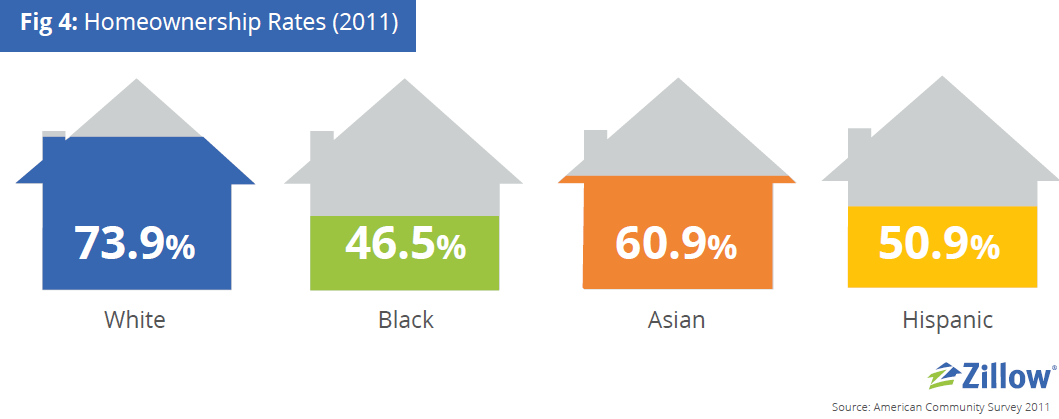 The analysis revealed that these disparities have existed for quite some time and are likely a direct result of the income gaps that still plague Black communities.
Zillow’s chief economist, Stan Humphries, explained that white applicants typically make $20,000 more annually than Black applicants who are seeking regular mortgages.
Even when focusing specifically on low-income buyers, Black people were still being denied at much higher rates than white people seeking Federal Housing Administration (FHA) loans.
Black people were denied for FHA loans nearly 25 percent of the time while their white counterparts were denied less than 15 percent of the time, the study revealed.
These disparities also play a factor in the extremely slow recovery of the housing market in predominantly Black neighborhoods.
According to Humphries, the report clearly confirms that “the housing playing field remains strikingly unequal in this country.”