Until the New Deal, Blacks had shown their traditional loyalty to the party of Abraham Lincoln by voting overwhelmingly Republican. By the end of President Franklin D. Roosevelt’s first administration, however, one of the most dramatic voter shifts in American history had occurred. In 1936, some 75 percent of Black voters supported the Democrats. But instead of using New Deal programs to promote civil rights, the administration consistently succumbed to discrimination — in order to pass major New Deal legislation, Roosevelt needed the support of Southern Democrats. In the end, while Franklin and Eleanor Roosevelt became beloved figures to millions of American Blacks, the New Deal did little to advance the cause of racial equality in America.
Authorizing Lower Pay Scales for Blacks
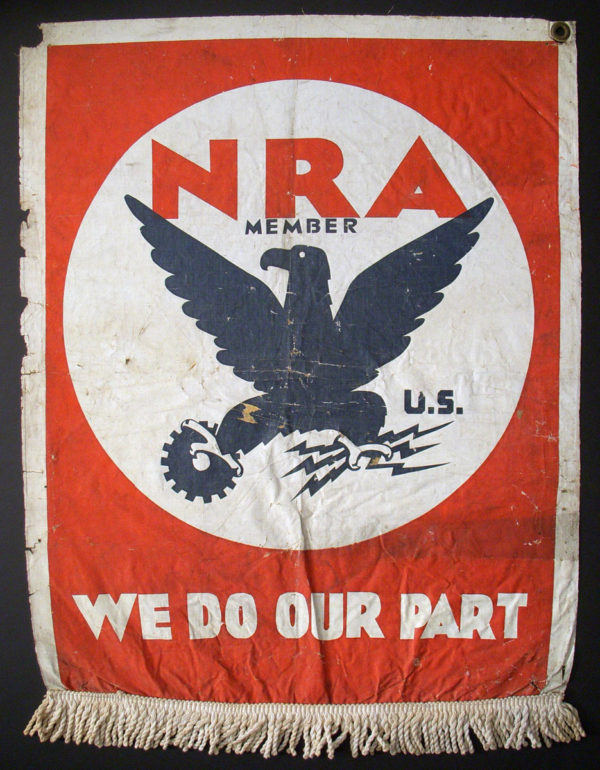
The National Recovery Administration, intended to reduce “destructive competition” and to help workers by setting minimum wages and maximum weekly hours, not only offered whites the first crack at jobs, but authorized separate and lower pay scales for Blacks, according to the site Digital History.

Keeping Blacks Out of White Neighborhoods
The Federal Housing Administration was created by Congress in 1934 to insure loans for construction and repairs of homes. White middle-class families could buy suburban homes with little or no down payments and extended 30-year amortization schedules and their monthly charges were often less than rents the families had previously paid to housing authorities or private landlords. But the FHA had an explicit policy of not insuring suburban mortgages for African-Americans, according to writer Richard Rothstein on the The American Prospect website. In suburban New York’s Nassau County, just east of Queens, Levittown was built in 1947 containing 17,500 mass-produced two-bedroom houses, requiring nothing down and monthly payments of about only $60. At the FHA’s insistence, developer William Levitt did not sell homes to Blacks, and each deed included a prohibition of such resales in the future.