10 Codes of Ethics White People Should Follow in Hip-Hop

White hip hop stars

Use That Privilege in a Positive Way

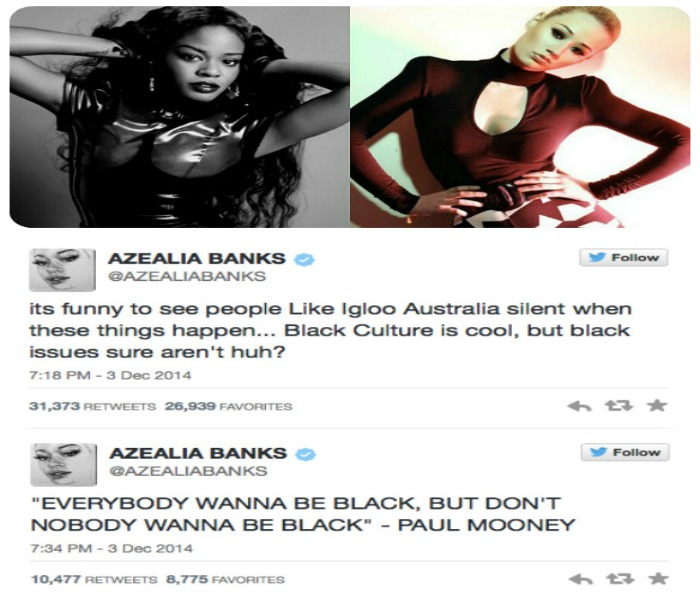
White hip-hop stars should always use their platform for a positive purpose, specifically for educating other white people on the culture behind hip-hop and the existence of their own privilege. Becoming a hip-hop star is certainly no guarantee that a white person is even knowledgeable about hip-hop culture, but it does make that person a musician with incredible access to both Black and white communities. For example, Iggy Azalea, despite her debated level of skill in the rap game, now has a significant fan base in both the Black and white communities. That access to urban communities should give the star a new perspective on race in America and allow her to generate conversations throughout the white community about racial bias and prejudice in America. It’s part of the reason why some hip-hop stars were surprised to see the “Fancy” rapper remain silent following the deaths of unarmed Black teen Michael Brown and Staten Island father Eric Garner.


White rappers

Accept Your Role as a Student

White hip-hop stars have to accept the fact that there will likely be a lot they need to learn about the culture, thus making them students of hip-hop. If white rappers continue to convince themselves that they don’t need to dive deeper into hip-hop’s history, they will never truly understand the frustrations many people in the hip-hop community have with the latest wave of white rappers.

Democracy needs journalism it can trust.

This election season, the stakes are higher than usual — and so is the pressure on newsrooms to soften their coverage, stay quiet, or just disappear. Independent reporting, the kind that answers to readers instead of advertisers or political pressure, matters more in a moment like this, not less.

For over 14 years, Atlanta Black Star has stayed independent and reader-funded. We have no corporate owner and no shareholders telling us what to cover or how to cover it. That independence is also our biggest vulnerability: nothing protects it except readers choosing to fund it directly.

Newspaper ad revenue has fallen more than 80% since 2005, and local newsrooms are closing at a rate of roughly two a week nationwide. When outlets go under in a moment like this, it's rarely the independent, reader-funded ones that get to stick around.

We know a request for support isn't why you came here. But without readers choosing to fund this work directly, the depth of reporting we can do at home and abroad shrinks along with everyone else's. If you're not in a position to give, that doesn't change how much we value you as a reader.

If you are able to, a recurring contribution does more for us than a single one-time gift, because it lets us plan the next investigation instead of just the next invoice. It takes about 30 seconds, no long form, no account. Thank you for continuing to support independent journalism and freedom of the press.

Back to top