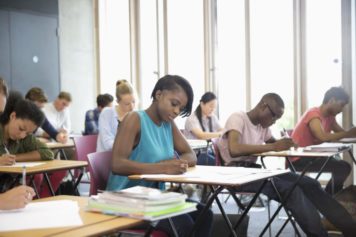
While many schools have decided to cut back on physical education (PE) classes, a new study published online in the journal Urban Education actually revealed that PE could significantly boost the academic performance of Black girls in high school.
It isn’t the first time a study suggested there could be a link between PE and academic performance for students at the K-12 level, but it’s one of the most recent studies that specifically targets African-American girls in high school.
A 2013 study revealed that more than 40 percent of schools across the nation had eliminated or cut back on their PE programs, but there are hopes that recent studies could convince those schools to bring the programs back.
The latest study used more than 180 African-American girls enrolled in an unidentified public high school in the Midwest.
All of the participants had PE classes every other day.
From 7 a.m. to midnight, the young ladies were asked to report the amount of physical activity they had every 30 minutes along with how intense this activity was.
The reports showed that outside of the PE blocks, the young women had relatively consistent amounts of physical activity every day, averaging less than an hour of daily moderate-to-vigorous physical activity and less than half an hour of vigorous activity.
On days with the PE classes, however, more than half of their total physical activity for the day came during PE.
Researchers then teamed up with teachers and gathered self-reports from the students about their academic performance.
It turned out that the students performed better on days where they were actively engaged in physical activity compared to the days when they did not have a PE class.
 “Students’ effort, attention and persistence during the initiation and execution of tasks in physical education could facilitate academic learning,” the authors wrote. “Learning experience, self-regulation, and values obtained through physical education could act as a necessity to enhance learning in other academic subjects.”
The authors believe that the connection between physical activity and better performance in the classroom needs to be taken seriously by schools all across the country and say that promoting physical activity should be a “coherent goal in urban inner-city schools.”
Back in 2012, a systematic review of more than a dozen studies also found a link between physical activity and academic achievement.