
6 Interesting Facts About How Racism Against Dark-Skinned People Developed in India


jarawa-musicians

Two Genetic Groups 

Research from Harvard geneticist Priya Moorjani suggests that all people in India trace their heritage to two genetic groups: An ancestral North Indian group originally from the Near East and the Caucasus region, and another South Indian group that was more closely related to the Black people on the Andaman Islands (shown above) off the coast of the sub-continent. Today, everyone in India has DNA from both groups in different proportions, according to Moorjani.
 

3621073057_884a27ba0c

Indo-Aryan Take Over

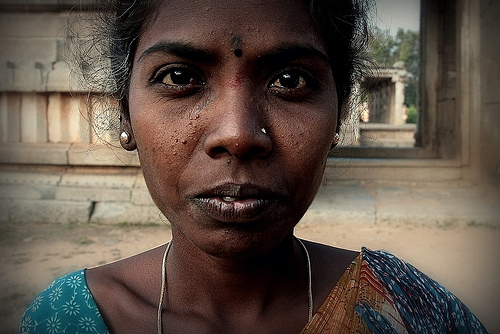
Twenty-eight percent of the Indian population is identified as Dravidian (above), among the oldest inhabitants of India. They primarily live in South India, where people tend to have darker skin. However, it is believed by some linguists that the Dravidians lived all across the Indian sub-continent before a group of foreigners from the North, known as Indo-Aryans, migrated over various periods of time, took over and, as some scholars argue, eventually established the caste system to suppress the indigenous groups.

Independent journalism still matters.

We hope this story was worth your time. For over 14 years, Atlanta Black Star has stayed Black-owned and independently run. We didn't get here by waiting on ad budgets that were never built to prioritize us. Our readers did that.

Corporate support for Black media has always been thin. Outlets like ours get roughly 1% of the $170 billion spent on U.S. advertising each year, and that margin is shrinking further as advertisers walk back the DEI-linked commitments they made in 2020. That's the backdrop. It's not why we're asking.

The wider picture isn't any steadier. Newspaper ad revenue has fallen more than 80% since 2005, and local newsrooms are closing at a rate of roughly two a week nationwide. When outlets go under, it's rarely the ones built to center a Black perspective from the ground up that get to stick around.

We know a request for support isn't why you came here. But without readers choosing to fund this work directly, the depth of reporting we can do at home and abroad shrinks along with everyone else's. If you're not in a position to give, that doesn't change how much we value you as a reader.

If you are able to, a recurring contribution does more for us than a single one-time gift, because it lets us plan the next investigation instead of just the next invoice. It takes about 30 seconds, no long form, no account. Thank you for continuing to support independent journalism and freedom of the press.

Back to top