 As the U.S. reportedly considers removing Cuba from the politically important list of nations that are “state sponsors of terrorism” and adding North Korea to the list, it appears there are two major characteristics a country needs to be a candidate for the list: the country needs to be non-white and be of little political importance to the U.S.
If that weren’t the case, the U.S. would have added Russia to the list long ago because of its military and financial support for Syria and its President Bashar al Assad, who has been accused of killing hundreds of his own people with chemical weapons.
The list currently has four names on it: Cuba, Iran, Syria and Sudan. With the accusation that North Korea sponsored the “cyber-vandalism” that released a flood of embarrassing emails of Sony executives to stop the release of the anti-North Korean movie The Interview, the Obama administration is considering adding North Korea back to the list. It was removed by President George W. Bush in 2008 in exchange for North Korea promises to scale back its nuclear program—which it never did.
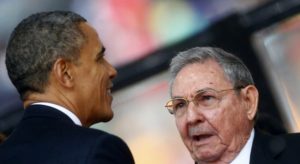
Cuba and the U.S. announced last week that they are resuming normal diplomatic relations after 53 years of frost between them. It was 32 years that Cuba was officially added to the terrorism sponsor list. Aside from the U.S.’s longtime hatred of the Castro regime, the U.S. accused Cuba of supporting the leftist Revolutionary Armed Forces of Colombia (FARC) and the Basque Fatherland and Liberty (ETA). But those accusations and causes dried up a long time ago. In fact, Cuba recently has been a mediator in peace efforts between FARC and the Colombian government.
In addition, the U.S. State Department itself has given Cuba its seal of approval, stating last year that there is “no indication that the Cuban government provided weapons or paramilitary training to terrorist groups.”
Why do countries care whether they are on this U.S. list of bad guys? Because membership on the list carries heavy financial consequences. You can’t ever receive financial assistance and weapons from the U.S. and you are basically cut off from the world’s economic oligarchy, which is ruled by the U.S. Other countries are going to be reluctant to do business with you for fear of offending the U.S.
Considering all the questionable groups and regimes the U.S. has propped up over the years, from the Khmer Rouge in Cambodia to the Nicaraguan contras to Manuel Noriega in Panama and Saddam Hussein in Iraq—before we decided they were bad guys—perhaps we should be at the top of our own list of state sponsors of terrorism.
While Cuba hasn’t yet been removed from the list, the White House is reportedly on the verge of doing so after last week’s historic announcement.
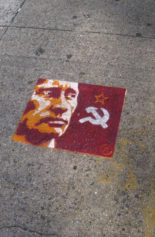
Meanwhile we likely will never hear talk of adding Russia to the list, in spite of its close relationship with list-member Syria. Despite the longstanding animus between the U.S. and its Cold War adversary, Russia is too important a player on the world stage, too influential and too white.
The U.S. only punishes small nations who won’t affect U.S. financial interests.
Take China, for instance. If the Obama administration is considering re-adding North Korea to the list because of the hacking scandal, then China should be part of the conversation. The U.S. well knows North Korean hackers operate with the assistance of the Chinese government, usually working out of Chinese territory and using equipment obtained from or in China, according to published reports.
If the U.S. were serious about the definition of “state sponsors of terrorism,” China would have to be considered for inclusion on the list. But then there’s the matter of China being the largest foreign holder of U.S. debt and basically propping up the U.S. economy.
China will never be added to the list. Nor will Russia.
No, you have to be non-white, with no real ability to do us harm.