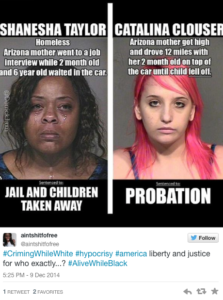
 After social media was set ablaze by the hashtag #CrimingWhileWhite, the hashtag #AliveWhileBlack has surfaced as a way to document the stark contrast between the America that white people experience and the one that has Black residents battling against racism and discrimination.
Even today new #CrimingWhileWhite tweets are hitting the web as white citizens share their stories of breaking the law and the very different outcomes they saw compared to unarmed teen Michael Brown, Staten Island father Eric Garner and the many other Black men who have been killed at the hands of police officers.
Both Brown and Garner were killed after their runins with law enforcements turned violent.
Garner was accused of selling loose cigarettes, although there is still no evidence to support the accusations, and Brown was seen on a convenience store camera taking a box of cigars.
Immediately, some people tried to justify the fact that Ferguson police officer Darren Wilson gunned down Brown because he had allegedly committed a crime moments before the encounter.
According to thousands of white social media users, however, the encounter would have been much different if they were in Brown’s shoes.
The #CrimingWhileWhite hashtag highlighted how many white people broke the law but were not even arrested or ticketed for their wrong doing. Instead officers often followed drunk drivers home, encouraged violent suspects to turn their lives around or laughingly told a white suspect that they only pulled them over because they believed they were Black.
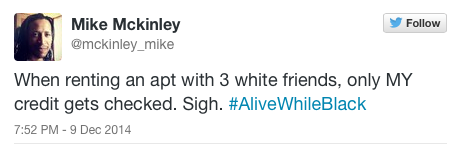
Now the #AliveWhileBlack hashtag is shedding more light on the other side of the story—the Black Americans who are being racially profiled by police.
Senior editor at Ebony.com Jamilah Lemieux encouraged the Black community to use the hashtag #AliveWhileBlack to share their own stories of being harassed or abused by police.
Unfortunately, the tweets were anything but surprising.
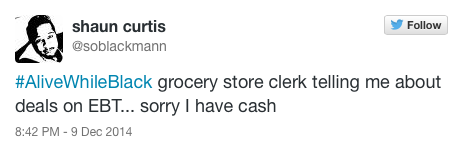
Black users flooded the social media site with stories about being pulled over while driving nice cars although they violated no traffic laws, being forcefully placed in handcuffs without an explanation and having officers rummage through their personal belongings despite no probable cause or consent to search.
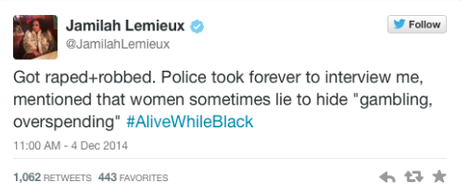
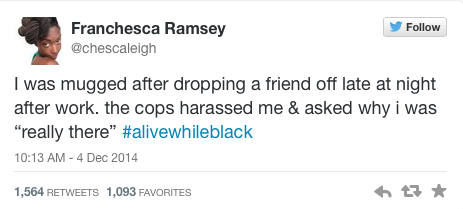
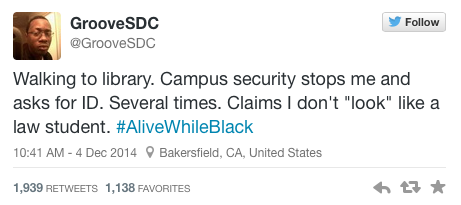
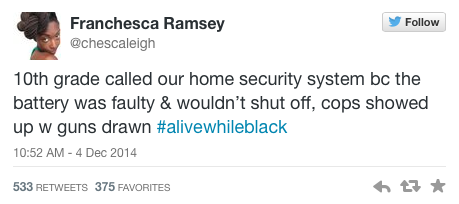

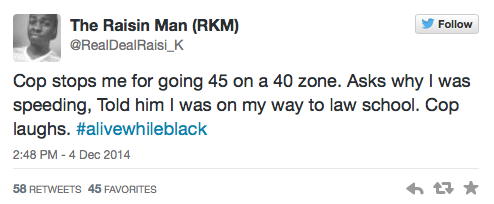
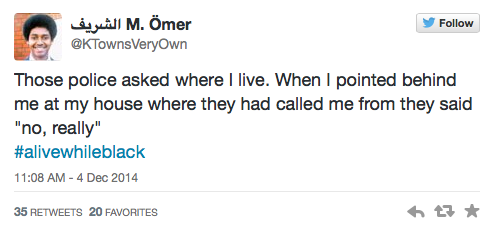
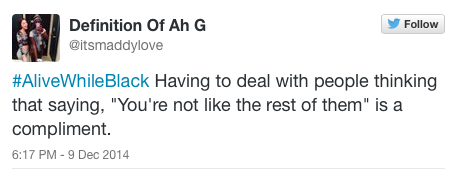
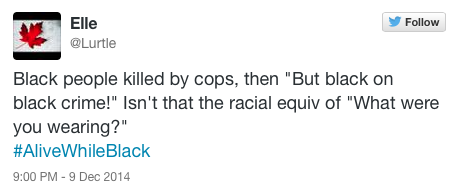
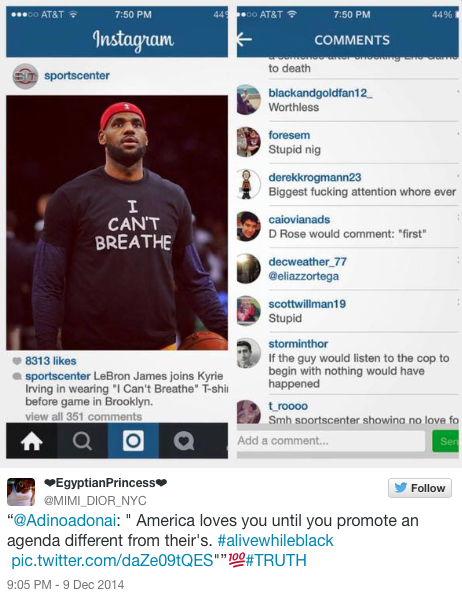
It wasn’t long before people broadened the topic beyond just police brutality in order to focus on highlighting the existence of racism in America as a whole. Users shared the faux “compliments” they received from those who believed they spoke well for a Black person, how people automatically assumed they were only in college because of affirmative action and their overall frustrations with the justice system and other racist institutions in America.