STEPHAN C. SCHUSTER, PENN STATE UNIVERSITY
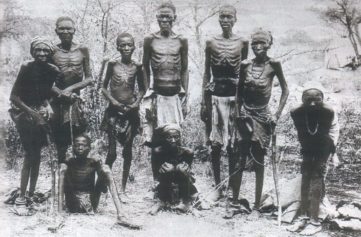
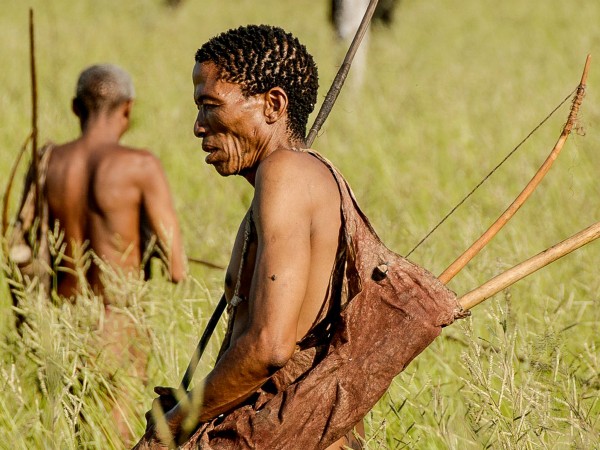
The famous Kalahari Bushmen of southern Africa have long been in decline. For more than a century, the people, who speak Khoisan languages, have been pushed off their land by farmers and brutalized by colonialists.
Yet for tens of thousands of years, the Khoisan’s ancestors were members of “the largest population” on the planet, according to a new study.
The Khoisan have long stood apart from other groups within Africa. They look distinct, speak in “click” languages, and have also maintained the greatest genetic diversity known among human populations. Usually, big populations harbor the most diversity. But census counts show that the 100,000 Khoisan speakers in Africa today are far outnumbered by other groups, such as the 45 million Bantu speakers and their 180 million descendants who now speak Swahili and other languages. Researchers have thought that the Khoisan inherited their genetic diversity from a large ancestral population, an idea supported by a single Khoisan genome published in 2012. But scientits couldn’t rule out that the variation in Khoisan DNA arose from more recent interbreeding with other diverse Africans.
In the new study, published online today in Nature Communications, biochemist Stephan Schuster of Nanyang Technological University in Singapore and colleagues sequenced the complete genomes of five Khoisan hunter-gatherers from Namibia and compared them with the DNA from 1462 genomes of people from around the world. Schuster’s team found that two of the Khoisan, members of the Ju/’hoansi population in Namibia, inherited their DNA only from Khoisan ancestors in the northern Kalahari region and showed no sign of interbreeding with non-Khoisan speakers. These two Ju/’hoansi genomes preserve ancient diversity inherited entirely from their direct ancestors, the authors say.
Read more at: news.sciencemag.org