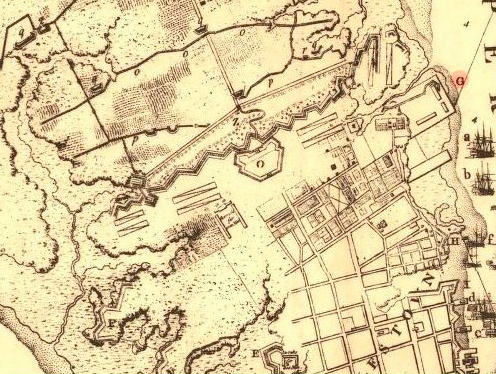
Gadsden’s Wharf
Researchers working with Brockington Cultural Resources Consulting believe they have found the remnants of Gadsden’s Wharf in South Carolina, where an estimated 100,000 enslaved Africans arrived in America.
“It is the place of arrival for a huge percentage of the early ancestors of people of African descent who live in America,” Mayor Joe Riley of Charleston, South Carolina said.
It is estimated that from 1803 to 1807 when Charleston’s population was only 20,000, more than 70,000 enslaved Africans were brought to the wharf. Historians believe that 40 percent of all enslaved Africans brought to the U.S. came through Charleston, which is more than any other port, according to rawstory.com
The wharf, which is the largest in North America, was initially built to transport goods in the rice trade, according to the research of Robert Macdonald, a consultant for the International African American Museum. But it eventually turned into one of the largest hubs for the slave trade.
“It could hold six ships at a time, and included an 840-foot quay and warehouses. Enslaved people were held there in crowded conditions as they awaited the auction block or transport to the newly purchased Louisiana Territory,” according to the Charleston Post and Courier.
The remnants were found during a dig this fall at the site where the city planned to build its International African American Museum.
“We believe these are actual elements of Gadsden’s Wharf,” said the museum’s program manager, Felicia Easterlin. “It’s huge for a preliminary first dig.”
Set to begin construction in 2016, the museum will preserve a “sacred space,” said Lonnie G. Bunch III, director of the Smithsonian’s National Museum of African American History and Culture. The museum plans to place above-ground markers in the location of the wharf, so that visitor’s know what lies beneath them.
A draft of the findings of the $17,000 initial study at the site revealed how archaeologists dug three trenches into the site and found timbers from a rice storehouse that was used to house slaves before they were sold, along with remnants of the Wharf.
“Gadsden’s Wharf is an Ellis Island for African Americans,” Bunch said to raw story.com. “It becomes one of the few places where African Americans can really go to pay homage to those ancestors.”