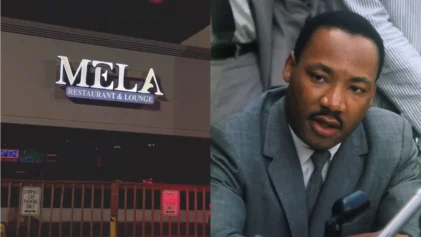
In early 1965, after the passage of the Civil Rights Act of 1964, Martin Luther King Jr. decided that registering Black voters in Selma, Alabama, would be the focus of the Southern Christian Leadership Conference’s (SCLC) efforts in the South. So they attempted three separate marches from Selma to the state capital of Montgomery to call attention to the state’s violent resistance. It was an intimidating distance of 54 miles, along a road known as Jefferson Davis Highway. The historic marches, and King’s participation in them, raised awareness of the difficulty faced by Black voters in the South. The event has been memorialized by Hollywood in a new movie, “Selma,” directed Ava DuVernay.

The 1964 Civil Rights Act Wasn’t Working in Alabama
Even after the Civil Rights Act of 1964 forbade discrimination in voting on the basis of race, efforts by civil rights organizations such as the Southern Christian Leadership Council (SCLC) and the Student Nonviolent Coordinating Committee (SNCC) to register Black voters met with fierce resistance in Southern states such as Alabama. Only 2 percent of Selma’s eligible Black voters (300 out of 15,000) had managed to register.

Jimmie Lee Jackson
A Young Black Man’s Death Was the Catalyst
It happened on February 18, 1965, when C. T. Vivian led a march to the courthouse in Marion, the county seat of Perry County, Alabama, to protest the arrest of leader James Orange. All of the street lights in the location were turned off, and state troopers rushed at the protesters, attacking them. Jimmie Lee Jackson ran with his mother to a nearby café, where they hid. Alabama State Trooper corporal James Bonard Fowler followed Jackson into the café and shot him as he tried to protect his mother. Jackson died eight days later of an infection resulting from the gunshot wound. In response, James Bevel, who was directing the Selma Voting Rights Movement for SCLC, called for a march from Selma to Montgomery to talk to Governor George Wallace directly about Jackson’s death and to ask him if he had ordered the state troopers to turn off the lights and attack the marchers.
On May 10, 2007, 42 years after the homicide, Fowler was charged with first degree and second degree murder for the death of Jimmie Lee Jackson. After pleading guilty to one count of second-degree manslaughter on November 15, 2010, Fowler apologized for the shooting but insisted that he had acted in self-defense, claiming that Jackson was trying to grab his gun. Fowler was sentenced to six months in prison.