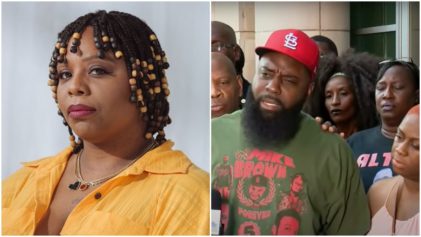
 Bruce A. Dixon, managing editor at Black Agenda Report, said that voting more Black faces into official positions isn’t the solution to problems facing African-Americans.
His comments, made to Press TV, were in response to the Congressional Black Caucus’ stance after the grand jury in Ferguson, Mo., decision was announced Monday night.
“The Ferguson grand jury’s decision not to indict officer Darren Wilson in the death of Michael Brown is a miscarriage of justice,” CBC Chair Marcia Fudge (D- Ohio) said in a statement. “It is a slap in the face to Americans nationwide who continue to hope and believe that justice will prevail.”
Dixon pointed out that the Congressional Black Caucus is the same group that “originally approved the militarization of police throughout the United States,” he told Press TV.
He disagrees with the idea that electing Black officials is a real solution because the same issues are having an affect on cities with Black leaders, too.
“The same sort of things that are happening in Ferguson are happening in cities and towns across the United States, where the police forces have been led by Black faces, and cities are led by Black mayors – places like Philadelphia, Atlanta, and New Orleans,” Dixon said.
Dixon says that it is a systemic failure that is affecting African-Americans in the United States. Electing “more black faces to high places… does not change the system fundamentally at all,” he said.