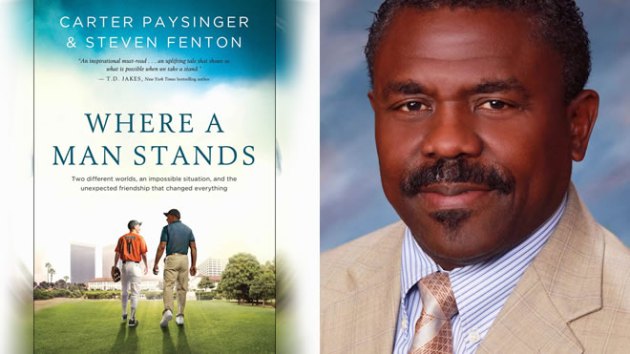
 Carter Paysinger and his former student, Steven Felton, made history together in a Beverly Hills high school.
Paysinger, who grew up in South Central Los Angeles, became the first Black principal in the 80-year history of Beverly Hills High.
Paysinger’s path to becoming a school principal in Beverly Hills began when his mother enrolled him into the Beverly Hills High School.
He was an impressive athlete in high school and was hired by his alma mater as a coach and teacher when he completed college.
His connection with one of his former students, Steven Felton, would prove to be a mutually beneficial relationship that would extend beyond their mutual love for baseball.
Paysinger remembers Fenton as “an intense, determined, passionate young kid who wanted to prove that he belonged,” he told ABC News. “That reminded me of me.”
Nearly 20 years later, Fenton joined the school board and persuaded the other members that they needed Paysinger to be the principle of Beverly Hills High. Fenton’s vote of confidence helped launch this historical moment for the school and for Paysinger.
“The best thing for the school was for Carter to lead it,” Fenton told ABC News.
Since Paysinger has been principal, Beverly Hills High has produced the highest test scores the school has ever had and the atmosphere of the campus has changed as well.
“I’m not sure if the city of Beverly Hills would really embrace an African-American principal,” Paysinger thought. “But I had the determination to do it and I knew Steven had the determination to do it,” he told ABC News.
The story of the two men from different backgrounds creating change has been turned into a book, “Where a Man Stands.”
“This was about turning our school around for the better,” Paysinger told ABC News.
“We made it happen,” he added.