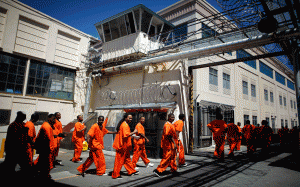
 In a process that is sure to have a huge impact on African Americans, the state of California is in the process of releasing potentially thousands of inmates from prison after voters overwhelmingly approved a ballot initiative that reduces many low-level felonies—many for drug possession—down to misdemeanors.
Public defenders are currently churning through stacks of cases, trying to decide how many of the 4,700 state prison inmates eligible for re-sentencing could be released, according to Al Jazeera America.
In addition to those doing state time, thousands more serving time in county jails or awaiting trial could end up with lighter sentences and walk free.
The passage of Proposition 47 earlier this month made California the first state in the nation to reduce a wide array of nonviolent crimes from felonies to misdemeanors, such as drug possession, theft, possession of stolen goods, forgery, shoplifting and check or credit card fraud involving less than $950. The new law doesn’t allow defendants with histories of violence or sex offenses to be eligible.
While 13 other states classify simple drug possession as a misdemeanor, California is the first to reduce such charges across the board, Al Jazeera America reports.
California has been grappling for years with enormous prison overcrowding—and in fact is under an order of the Supreme Court to reduce overcrowding—so the new law should go far in alleviating the problem. The measure was approved by 59 percent of the voters—though it was opposed by many prosecutors and law enforcement officials.
Ironically, it was California 20 years ago that led the nation in locking people up after voters approved a harsh three-strikes law for defendants, sending them away for 25 years to life in prison if they were convicted of a third offense, even if it was nonviolent. That law that was a significant factor in prison overcrowding.
“And now here’s California reversing itself again,” Jody David Armour, a law professor at the University of Southern California and expert on gun control and racial profiling, told Al Jazeera America. “In some ways, I feel heartened that the electorate itself has taken this issue to heart.”
The state hopes the new law will save hundreds of millions of dollars annually and plans to use the money to fund school truancy and dropout prevention, mental health and substance abuse treatment, victim services and other programs designed to keep offenders out of jail and prison.
“It’s the first time that criminal justice reform of this nature has been endorsed by public referendum,” Will Matthews of the ACLU, which spent millions to help sell the initiative to voters, told Al Jazeera.
He said it shows that the public is awakening to the fact that “simply locking up as many people as we can is not the smartest or most fiscally prudent way of approaching crime and punishment.”
The ACLU has been receiving phone calls from advocacy organizations across the country, meaning other states may soon be on the verge of voting on such a measure.