Reuters
Ethiopia hopes a raft of deals signed with Egypt on Monday will enhance frosty relations with its North African neighbor, despite Cairo’s lingering concerns over the potential impact of a 6,000MW power dam project.
The two countries have been engaged in a dispute over the construction of the East African country’s $5bn Grand Ethiopian Renaissance Dam (GERD).
Ethiopia says more than 40 per cent of the dam is completed so far.
The dam has been a source of concern for the Egyptian government since May last year, when images of the dam’s construction emerged in the media.
Cairo fears the operation of the dam, built on the Nile, will reduce the flow of water and threaten livelihoods.
Ethiopia, however, has repeatedly dismissed Egypt’s concerns, saying the hydropower dam project will not consume water.
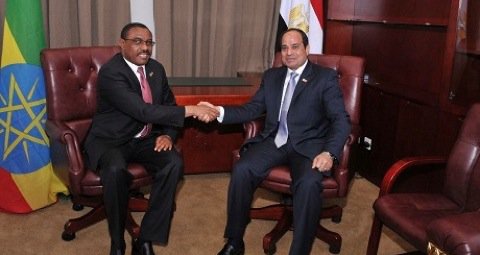
Leaders of the two nations, Egypt’s President Abdel-Fattah El-Sisi and Ethiopian Prime Minister Hailemariam Desalegn, met at an African Union summit in Malabo in June , where they embarked on an initiative to ease tensions and further enhance cooperation in other areas.
An Egyptian delegation, led by Foreign Minister Sameh Shoukry, was in Addis Ababa earlier this week to iron out various cooperation deals and sign a Memorandum of Understanding in several areas including education, trade and health.
Ethiopia’s Foreign Minister Dr Tedros Adhanom said the two countries “have been linked indissolubly by the great River Nile.”
And now, he said, the two countries need to work more “effectively to implement agreements signed” despite their low level of trade and economic relationship so far.
Tedros has also assured Egypt that his country would follow the right path while carrying out the Dam project.
“We do the right thing on the basis of accepted international norms and laws,” he said.
The GERD will have far reaching benefits for all the people of the region, he said, reiterating that “the purpose of the Dam is hydro-power generation.”
Read more at theafricareport.com