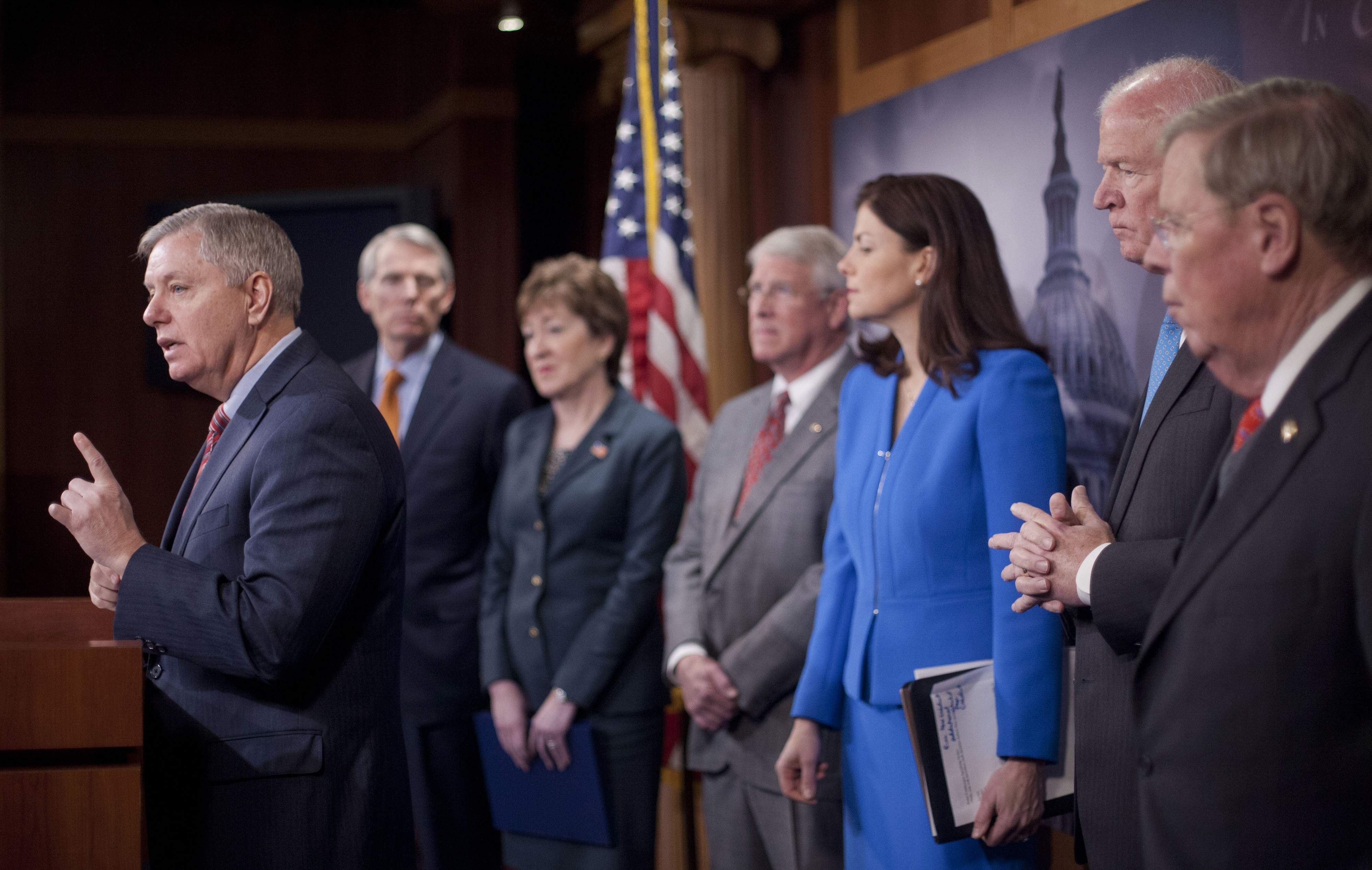
 For the first time in eight years, Republicans have captured control of both the Senate and the House, giving them control of Congress and the option to force the president into the vice grip of an even tighter political gridlock.
With President Obama’s proposed policies hanging in the balance and political power skewing drastically in favor of the GOP, what will the future hold for Black communities across the nation?
Georgia State University political science professor Lakeyta Bonnette explained that the current rift between both parties and the division of power between a Democratic president and a Republican Congress could prove detrimental to the Black community if both parties are unable to work together.
“I think we’re still going to be in a constant gridlock,” Bonnette said. “But we have to move on to focus on unemployment rates, which are higher among African-Americans, raising minimum wage—some of these policies that are of interest to the Black community are policies that we’re not going to be able to move on.”
Bonnette also predicted that there will be a lot of talk about repealing President Obama’s healthcare plan which, “again affects African-Americans as far as having access to affordable healthcare.”
It’s a trend that has already been seen on a national level with some states—particularly in the South—deciding not to expand Medicaid, which studies have show affect not only the poor in those states but also serves as a drag on the state’s overall economy.
With sky-high unemployment rates plaguing Black communities and middle class Blacks earning much less than their white counterparts, it’s only natural that these types of issues are at the center of the Black community’s interest—and frustration.
In other words, Republican control of Congress has the potential to lead to a continued struggle for young Black women to have access to birth control, a stagnant minimum wage in many states despite the rising cost of living and the shipment of more jobs overseas.
Perhaps the largest issue that could fall between the cracks of the Republic Party’s agenda is funding for education.
Earlier this year, studies revealed that Black college students are often faced with much higher student loan debts than their white counterparts due to Black families on average having lower household incomes.
A plan for educational funding that focused on these low-income students could greatly benefit the Black community but the likelihood of such a plan passing seems bleak under GOP control.
“Students are now over-burdened with student loans,” said Larry Johnson, a commissioner in Georgia’s DeKalb County just outside Atlanta. “A lot of them have decided to drop out… and education is the gateway for a successful society.”
Not just at a collegiate level, but during the early stages as well.
Public schools have seen a drastic decrease in staff while classroom sizes increase due to budget cuts in many predominantly Black school districts.
According to Commissioner Johnson, who has been a champion of empowering DeKalb Country residents through efforts to improve education, there seems to be a general “lack of concern” in Congress about how these cuts to educational funding impact Black communities.
Another issues that tends to be overlooked by some in the Black community is the issue of immigration laws.
Bonnette pointed out that the Republican Party’s strict plans for immigration could actually have a strong impact on the Black community, especially in the midst of the nation’s Ebola scare.
“I think we often look at immigration as an issue that only effects Latinos, but it also effects African Americans,” Professor Bonnette said.
 More than half of the 3 million immigrants that comprise America’s population come from the Caribbean and account for more than one-quarter of the Black population in New York, Boston and Miami, according to AmericanProgress.org.
Bonnette pointed out that rhe GOP’s use of “scare words” like terrorism and the threat of Ebola could serve as a foundation to restrict the nation’s borders.
The silver lining to what some consider a rather dark cloud is that Congress also welcomed many influential new Black figures who have the potential to bring the Black community’s concerns to the forefront of their agenda.
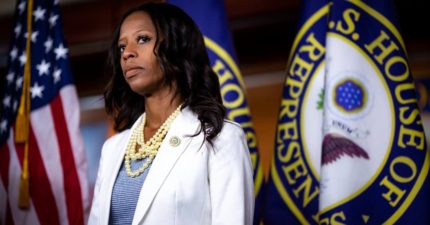
Historical moments in the nation’s history were made after a tight race in Utah welcomed Mia Love as the country’s first Black female Republican in Congress.
Tuesday’s election results also ushered in New Jersey’s first African-American congresswoman, Watson Coleman, and the first Black Senator to be elected in the South since the Reconstruction era, Tim Scott of South Carolina.
While the future of the Black community under a GOP-controlled Congress is still much of a guessing game, Commissioner Johnson emphasized that now is the time for both parties to focus on working together to move the country forward.
More importantly, he said, it’s time for the Black community to mobilize together as a unit regardless of political affiliation.
“We can not just sit back and say ‘woe is me,’ “ he said. “We have to, as a people, look at the obvious, regroup, recalibrate and see what our interests are and move forward on both parties. We can’t just sit back and say ‘everything is dead. We can’t do this.’ We are resilient people. We can overcome this but we have to stay strong—and work together.”