First they spat angry words at Remy Bazie. Then they struck him in the face with an iron bar, knocking him unconscious.
The men who jumped the Ivory Coast migrant at a crowded Moscow train station last November did not rob him. But they damaged his jaw to the degree that doctors had to install a metal plate to hold it in place. It took Bazie four months to raise the $3,600 to undergo surgery.
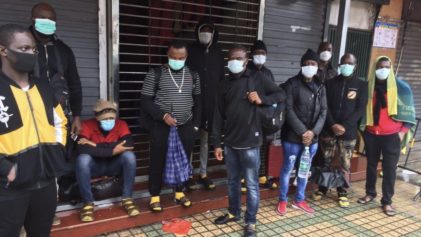
“Most of the time I’m harassed, but this was the worst experience,” Bazie, 28, said recently as he sat at a parish community center in Moscow where African migrants often seek refuge.
His story is not uncommon, Russian civil and human rights leaders say. African migrants face widespread hostility and racism that usually go unpunished.
According to the SOVA Center for Information and Analysis, a Moscow-based advocacy group and think tank, 177 acts of violence against blacks have been reported in Russia since 2010.
But rights advocates said interviews with Africans living in the capital, as well as anecdotal evidence, indicate that a far higher number have been victims of racial attacks and experienced race-based harassment. Most, however, never report the assaults, the advocates said.
“Living here in Russia is like living in hell on Earth,” said Osman Kamara, 35, a Liberian who fled civil conflict in his homeland 10 years ago, only to fall victim to a skinhead attack in Moscow. “They don’t like our color. Going out is a problem. Maybe if you go out, you might not return.”
Some Africans say that after arriving here, they heard the Russian word “obezyana” directed at them so often that they initially thought it meant “black person.” It means “monkey.”
Read more at: latimes.com