Evans Wadongo, 28, Kenya
Despite political and social bottlenecks in different parts of the continent, Africa’s young inventors are breaking barriers to write their names on the sands of time not only in their country but also on the world’s timeline. Among these exceptional people are young Africans looking inward to create specialized solutions to the unique challenges that their societies face. While there are many more out there (and more coming up), here are young African inventors providing creative solutions to the continent’s social problems.
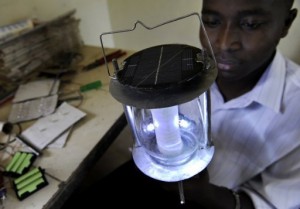
Born in the Western part of Kenya, Evans Wadongo grew up in a rural village without electricity, giving him a firsthand experience of energy poverty. He grew up walking a long distance to buy kerosene for “Koroboi,” a common kerosene lamp in Kenya that often causes eye problems due to the frequent exposure of smoke from the lamp.
However, at age 19, while trying his hands on a dorm experiment involving the timing of LED (light-emitting diode) Christmas lights, Wadongo discovered that he could create an environmentally friendly source of light that will light up his community.
With the help of a crafts worker, Wadongo succeeded in designing a solar lantern, MwangaBora (meaning “good light’), which is made from 50 percent recycled material and now widely distributed in Kenya and Malawi.
Verone Mankou, 27, is the founder of VMK and the inventor of Way-C tablet, Africa’s answer to iPad. He is also the creator of the first African-made mobile phone, Elikia (“Hope”). With his invention, the Pointe-Noire-born inventor has been able to provide affordable smart devices to his country, the Republic of the Congo, and Africa) and also increase Internet access in the country.
Mankou hopes to compete with the multinational American and Asian tech companies like Samsung and Apple. He also hopes to train young African entrepreneurs and make his product affordable for Africans.
Read more at ventures-africa.com