Source: Press Connects
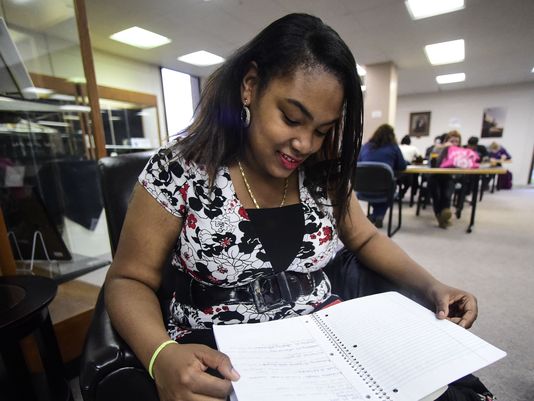
During Melanie Alexander’s first semester at SUNY Broome, a friend asked if she wanted to come to a Black Student Union meeting on campus.
Alexander said yes, and almost instantly took an interest.
The club was in a downswing year after having been active on campus periodically in the past. Alexander recognized the group’s potential, and quickly set about getting the club back to where she thought it should be.
“I’m dedicated, so once I see something, (I become determined),” Alexander, 24, said. “I … just (thought), ‘I have to help it grow.'”
Alexander, who is African-American and Native American, is part of a growing diversity within Broome County.
In the most recent Census, 9,614 residents, or almost 5 percent of the county’s population, identified as Black.
That’s a significant increase from 50 years earlier, when about 99 percent of the Broome County population was white and only 1,290 residents were reported as Black, according to 1960 Census data.
By 2060, U.S. Census Bureau projections estimate that the number of Broome County residents who will identify as Black will total 14,897, or 7 percent of the county’s population.
Alexander, a Binghamton resident, said any diversity you see in the county now varies depending on where you go. On campus, there isn’t much diversity in the classrooms, but that has improved since the dorms opened, she said. Statistics on the racial composition of the full student body are not available.
In the year that Alexander has spent with the Black Student Union, she has watched the club grow just as she had hoped it would. The group has more than 20 members who attend meetings and events, in addition to its executive board members, she said.
But more important than its size, the Black Student Union has a presence on campus again and is making an impact both at the college and in the community, according to Kim Lamar Shelton, the club’s adviser and the director of TRiO Student Support Services at SUNY Broome.
Read more at pressconnects.com