 Hundreds of Americans have flown to Liberia in the past few days. Thousands more are on the way.
This Ebola corps is a collection of doctors, nurses, scientists, soldiers, aviators, technicians, mechanics and engineers. Many are volunteers with nonprofit organizations or the government, including uniformed doctors and nurses from the little-known U.S. Public Health Service. Most are military personnel, snapping a salute when they are assigned to their mission — “Operation United Assistance.” It does not qualify for combat pay, only hardship-duty incentive pay, which is about $5 a day — before taxes.
“We’re going over there to take the fight to the enemy,” said Sgt. Maj. John Kolodgy of the 2nd battalion of the 501st Aviation Regiment, stationed in Fort Bliss, which is sending 85 soldiers this weekend to Liberia to provide airlift capability. “In this situation, the enemy is Ebola and the spread of Ebola in Africa.”
The “Iron Knights” from Fort Bliss in El Paso, Texas, will join hundreds of soldiers from the 101st Airborne who departed for Liberia in flights from Kentucky’s Fort Campbell on Thursday and Saturday. The U.S. military presence in West Africa is expected to grow to more than 900 troops by Sunday, a number that will climb to 3,900 in coming weeks.
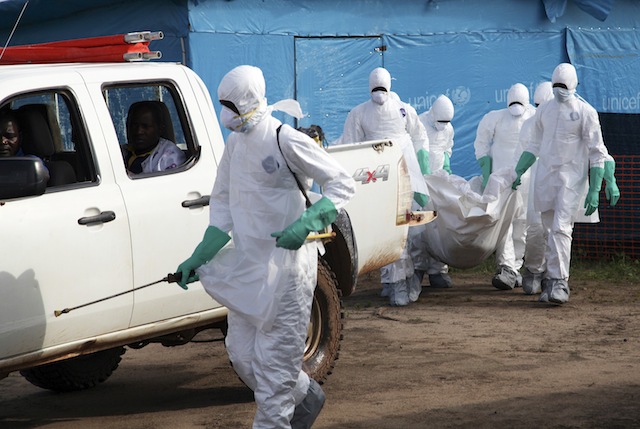
Global health officials have a plan to bring Ebola victims out of their homes, where they can easily spread the virus, and treat them in health facilities. The 101st Airborne officially took command Saturday of the effort to build 17 Ebola treatment units in Liberia with 100 beds each.
For the military, this is an unusual mission. Past humanitarian efforts have involved events that have already occurred, such as hurricanes, typhoons and earthquakes, but this crisis is still developing, generated by a pathogen that is dynamic and unpredictable.
The U.S. military is deploying primarily to Liberia, though the U.S. civilian operations include Guinea, Sierra Leone and other nations in West Africa. President Barack Obama announced Sept. 16 that the military would provide support to the civilian-run effort that had failed to keep the epidemic from growing exponentially. The question now is whether this more muscular response is too little too late.
Read more at: washingtonpost.com