 Many South Africans are still fighting to reclaim land taken away from them during apartheid. The BBC’s Sophie Ribstein spoke to a family about their ordeal.
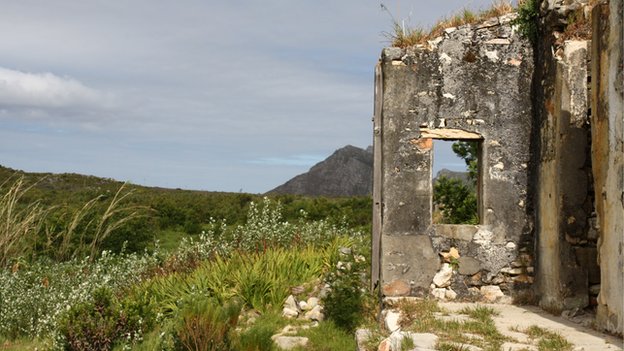
It is a beautiful piece of land, a windswept nature reserve just above the bay of Simon’s Town. Walking through lush vegetation, you can see the wild rocky hilltops of the Cape peninsula in the distance.
But the magnificent mountain landscape, bathed in light, has been the theatre of a troubled history.
At the far end of the African continent, Redhill was once a village, home to more than 70 predominantly mixed-race (or coloured, as they are referred to in South Africa) families.
Today, the ruins of their houses are a refuge for baboons. Roofs and windows have been destroyed, blown away by the passing of time.
But stone walls are still standing, reminders of a precious past for those who were forcibly removed in the late 1960s by South Africa’s white minority regime.
“Here was the lounge and this used to be the kitchen with a fireplace and the small bedroom at the back,” says 78-year-old Lily Lawrence, walking through the old stones that were once her home.
What was apartheid?
- Introduced in 1948 by the Afrikaner-led National Party government
- Black people regarded as inferior
- Only white people allowed to vote
- Races segregated in all aspects of life, including housing and schools
- Prevented Black people from owning land in most of South Africa
- Reserved most skilled jobs for white people
- Banned sexual relations between Black and white people
- Scrapped in 1994 with the election of Nelson Mandela as first Black president
The Group Areas Act, passed in 1950, was a pillar of the brutal apartheid regime.
Among other things, it led to the removal of non-whites from real estate considered desirable by the government. Over the following decades, thousands of families were forced to leave their homes and relocate to barren land.
‘Heirlooms’
The effects of this policy have yet to be reversed. Even in post-apartheid South Africa, much of the most fertile territory is still in the hands of a few thousand white commercial farmers.
The pace of reform has long been criticized as too slow.
Just after his re-election to a second term in office in May, South African President Jacob Zuma announced the creation of another window for lodging claims for the restitution of land. Many people had missed the previous window, which expired in 1998.
Zuma also hailed the progress made so far in returning land to its rightful owners.
However, Lawrence and her relatives are not among the lucky ones.
In March 1970, the families at Redhill were given seven days’ notice to move. The authorities told them they wanted to build a dam — a project that has never been pursued.
Lawrence has vivid memories of happy years at Redhill.
“We all loved walking to the mountains, picking flowers and just smelling the aroma of the herbs,” she says. “There were animals — pigs, fowls, horses, milking cows.”
Read more at bbc.com