
12 Blockbuster Hits With Racially Offensive Undertones Directed at Black People

planet-of-the-apes-classic-01

Planet of the Apes

The original Planet of the Apes, starring Charlton Heston and released in 1968, served as a “what if the shoe was on the other foot”-type scenario, where white men experience the type of discrimination regularly experienced by Black people. Though it was intended to show support for Black people’s fight for human rights, it reinforced the racist notion of Blacks not being fully human, choosing apes and monkey of all animals as stand-ins for Black people. It also played into the issues of skin-color hierarchy, making lighter apes more intelligent than their darker, more uncivilized counterparts.
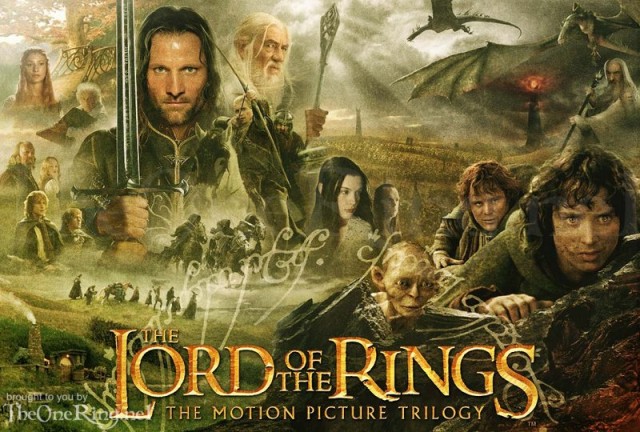


lord of the rings poster

Lord of the Rings

The motion picture trilogy and the novel by J.R.R Tolkien, upon which it is based, has been accused of being racist for having all the good guys white-skinned, mostly blond and mostly blue-eyed. The bad guys, on the other hand, are described with combinations of black, slant-eyed, unattractive, inarticulate or a psychologically undeveloped horde.  Although Tolkien had an entire Black civilization in his novel, director Peter Jackson didn’t include it or any Black actors, for that matter.

Subscribe To The ABS Newsletter — Get our stories in your inbox.

Independent journalism still matters.

We hope this story was worth your time. For over 14 years, Atlanta Black Star has stayed Black-owned and independently run. We didn't get here by waiting on ad budgets that were never built to prioritize us. Our readers did that.

Corporate support for Black media has always been thin. Outlets like ours get roughly 1% of the $170 billion spent on U.S. advertising each year, and that margin is shrinking further as advertisers walk back the DEI-linked commitments they made in 2020. That's the backdrop. It's not why we're asking.

The wider picture isn't any steadier. Newspaper ad revenue has fallen more than 80% since 2005, and local newsrooms are closing at a rate of roughly two a week nationwide. When outlets go under, it's rarely the ones built to center a Black perspective from the ground up that get to stick around.

We know a request for support isn't why you came here. But without readers choosing to fund this work directly, the depth of reporting we can do at home and abroad shrinks along with everyone else's. If you're not in a position to give, that doesn't change how much we value you as a reader.

If you are able to, a recurring contribution does more for us than a single one-time gift, because it lets us plan the next investigation instead of just the next invoice. It takes about 30 seconds, no long form, no account. Thank you for continuing to support independent journalism and freedom of the press.

Latest from Atlanta Black Star

Back to top