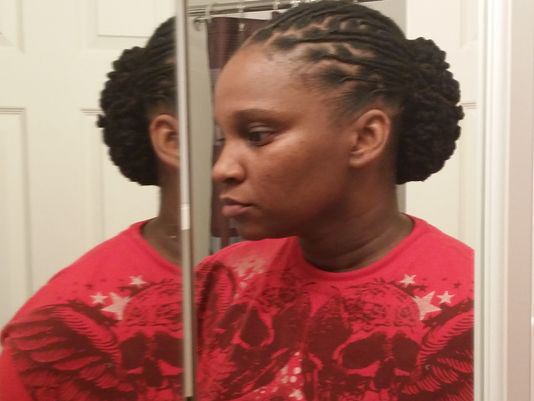
 The U.S. Navy announced on Wednesday it was going to discharge Hospital Corpsman 2nd Class (SW/AW) Jessica Sims for not changing her traditional African-American hairstyle.
Sims was scheduled to be honorably discharged today after refusing to change her hair, which she says has been in its current style during most of her time in the Navy since 2005.
Sims didn’t experience any problems until she was assigned to teach at a Navy boot camp in Illinois.
Navy officials at the boot camp claimed that Sims’ tightly-wound dreadlocks, which were twisted into a bun, violated regulations and would be problematic when placing on a gas mask.
“For the past couple weeks, not knowing what the Navy was going to do, if they were going to move forward with the discharge or keep me in, had me in a little limbo,” Sims told the Navy Times. “In the back of my head, I knew that they weren’t going to change, so it was more of just waiting for the date.”
Chief of Naval Personnel spokesman Lt. Cmdr. Chris Servello claimed that Sims disobeyed a lawful order to conform her hair to Navy regulations in April.
Sims says that the Navy bans “widely-spaced individual hanging locks,” but her locks are actually closely-spaced, worn in a bun and don’t violate the rules.
“I don’t think I should be told that I have to straighten my hair in order to be within what they think the regulations are, and I don’t think I should have to cover it up with a wig,” she told the Navy Times.
Read more at opposingviews.com