The U.S. Department of Education has launched an investigation of two public schools in Chicago after allegations that severe budget cuts and canceled classes are ruining the quality of the students’ education.
Both of the schools on Chicago’s South Side are predominantly African-American and have undergone a series of changes that some believe has led to “separate and unequal” education.
Classes are continuously slashed at Dyett High and Mollison Elementary schools, leading to more online classes and overcrowding in classrooms.
Students at Dyett are now only able to take physical education, art, music and Spanish classes online instead of in a traditional classroom.
According to the Huffington Post, community activists have pointed out that the students are not being offered advanced placement or honors classes because of the budget cuts.
As for Mollison students, they are coping with severely overcrowded classrooms.
The school board’s 2013 plan to shut down 50 schools has created what MSNBC called a “school desert” around Mollison. With all neighboring schools shut down, more students are enrolling at Mollison, leading to staggering numbers of students in the classrooms.
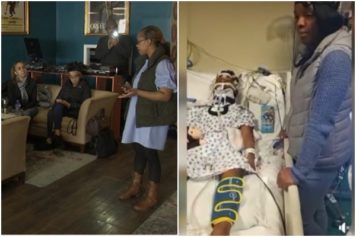
Jeanette Wilson, a senior adviser to Rev. Jesse Jackson, told at a press conference on Tuesday that the investigation by the Department of Education is a “major first step” in the right direction.

Source: Progress Illinois
“The fact that they are going to look into it at all says that some of the practices that have been accepted as normal and appropriate are now being questioned,” Wilson said, according to the Chicago Sun-Times.
Last month, Jackson also joined the discussion, saying the students of Chicago deserve better.
“These students deserve equal and adequate protection under the law,” Jackson said in July, according to DNAinfo. “We deserve an equal playing field for our children, too.”
Unfortunately, the school board’s plan means that Dyett will also be forced to close its doors in 2015.
Chicago Public Schools officials insist that they have been listening to the complaints of the activists in the community, but refuse to make any changes to their plans.
Chicago isn’t the only major city to face racial discrimination allegations either.
The Department of Education has already launched investigations into civil rights complaints against schools in New Orleans and Newark, New Jersey.