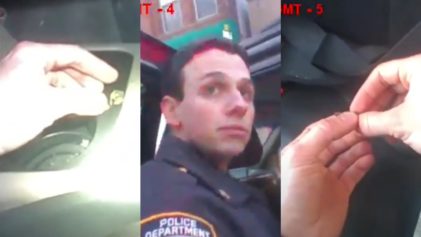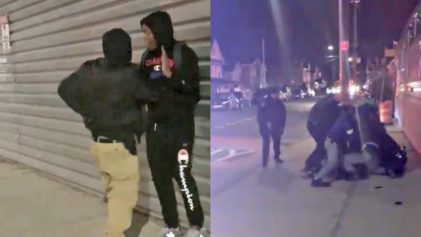
Credit: CBS 2
New York police officers who shot and killed 16-year-old Kimani Gray in Brooklyn last year will not face any criminal charges.
According to CBS 2, the Brooklyn district attorney’s office made the announcement on Wednesday that the officers will not be prosecuted.
In March 2013, Gray was shot seven times in his shoulders, arms and legs by police officers.
The death of the young boy sparked protests all across the state, with some of the demonstrations leading to violence.
Despite the community’s push for the officers to receive jail time, they will not be facing any major consequences.
Today there are still major contradictions between what Gray’s family and the community believe happened that night and what police officers said happened.
According to Gray’s mother, Carol Gray, her son attended a birthday party that night and was later shot in front of his friend’s house by the officers.
The police, on the other hand, have a different version of events.
Authorities said that Gray was with a group of young men outside a home on East 52nd street, when the Brooklyn South Anti-Crime Patrol confronted them.
It is unclear why the officers decided to approach to the young men.
As the officers began talking to the group of men, they claim Gray began acting suspicious before reaching for something his waistband.
The plainclothes officers said they saw the teenager unveil a gun and they began to fire before he had the chance to use it.
The teen was taken to Kings County Hospital and soon after pronounced dead.
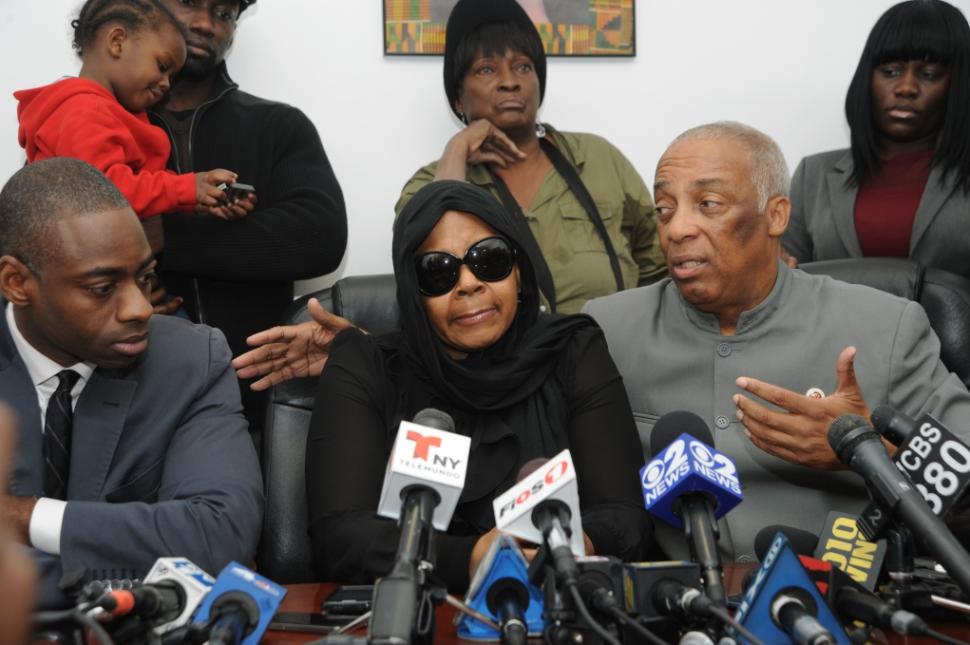
Credit: Todd Maisel/New York Daily News
Authorities also claim that Gray was gang-affiliated and had been arrested several times.
Family members of the teen insisted he was never in a gang, and they believe officers planted the weapon that they allegedly retrieved at the scene.
Other members of the community still did not believe the officers’ version of events justified firing at the teen seven times.
The community’s outrage sparked four consecutive nights of protests and led to more than 50 arrests.
Sadly, this is far from the first time a young Black man was killed at the hands of New York officers.
On July 17, a video of Eric Garner’s arrest went viral after a police officer was seen putting him in a chokehold. Chokeholds are prohibited by the NYPD because of the danger of injury.
Garner is heard repeatedly telling officer he can not breathe before he finally pushed to the ground as other officers swarm in to pin him to the concrete. Garner, 43, died shortly after.
In 2012, officers chased 27-year-old Tamon Robinson after he allegedly stole paving stones from a construction site. Robinson fled when officers approached him, even though his friends said he had permission to take the stones.
Officers said Robinson accidentally ran into one of their police cars before dying of the resulting injuries six days later.
Witnesses, however, said officers intentionally drove their cars into Robinson, hitting him so hard that he bounced off the hood of the police vehicle.
Charges were never filed against the officers.