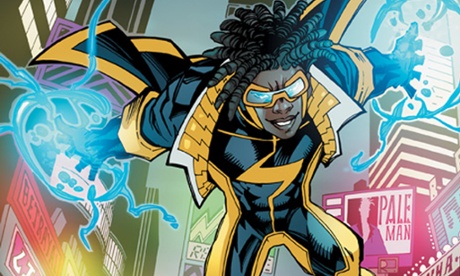
An undated image provided by DC Comics shows Static Shock, one of the publisher’s African-American heroes created by late writer Dwayne McDuffie and Michael Davis who championed more minorities in the pages of comic books. (AP Photo/DC Comics)
When Milestone Media co-founder Michael Davis first started Comic-Con’s Black Panel in 1998, he had a very clear purpose for the discussion – to get African-Americans to focus on creating their own heroes.
Over the years, the Black Panel has become a staple at Comic-Con, earning it a lengthy 90-minute slot, which is rare for any panel at the major convention celebrating the latest in comics, films, TV, animations and other creative industries.
The panel always stood out at the convention as one of the few that does not have a promotional purpose, nor is it attached directly to one particular project.
The Black Panel presents an open and honest discussion about the state of diversity in the entertainment business and the impact it has on Black culture.
While it is not the first panel of its kind to be featured at the convention, it is the first one to have such a major influence.
“When I first started the panel, there was a panel here at Comic-Con called Blacks in Comics,” Davis told The Guardian. “And that was a b***h fest, people saying, ‘Oh, Marvel won’t hire me.’ So I created the Black Panel, which is positive. We ask, ‘How do we create our own heroes?’ “
A part of the solution is to encourage young people of color to get involved with the comic industry if it interests them.
“I want to reach young people of color, and let them know they can do what I do,” Davis said. “I don’t play basketball and I’m not a rapper, though I can sing karaoke.”
He said there are lot of young Black kids who are interested in writing or drawing comics, but have no idea how to go about chasing a career.
 “There’s 16-year-old kids out there who love comics, who have no idea how to get into the field,” he said. “I want to let them know that this is possible. I want to tell them to know these people on the Black Panel, stay in touch with these people.”
This year, one audience member may very well see his dream come to fruition.
A Comic-Con attendee told the panel of an idea for a comic book that features an African-American woman as the lead character.
Actor Orlando Jones, who was featured on this year’s panel, told the surprised audience member to send him the comic.
“I’ll put it on my networks,” Jones promised.
Davis said that’s a huge opportunity.
“That’s not a small thing, he’s got 100,000 followers on Twitter,” he explained.
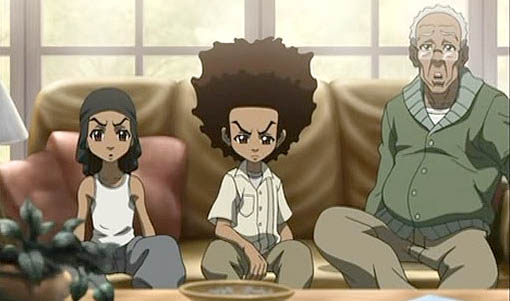
In addition to creating the Black Panel, Davis also has a mentoring program that has become known for launching many incredibly successful careers, including that of “The Boondocks” creator Aaron McGruder.
Throughout the panel’s history, it has featured many influential African-Americans, including music producer RZA, basketball legend Shaquille O’Neal and Nichelle Nichols who is best known as Star Trek’s Lieutenant Uhura.