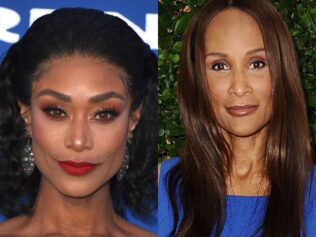
Beverly Johnson was once told she would never get a Vogue cover. But today, the 61-year-old model is celebrating the 40th anniversary of becoming the first African-American woman to do just that.
When Eileen Ford told her she would never appear on the cover of Vogue, Johnson left Ford Models and signed with Wilhelmina Models. After posing for a beauty shoot for the magazine, Johnson received a call from Wilhelmina Cooper during which she learned she was actually the cover star of Vogue’s August 1974 issue.
“I was in my first New York apartment on the East Side – mattress on the floor, candles. I threw on my jeans and ran to the newsstand. All these people were rushing to work trying to buy their papers so I had to wait. Of course, I didn’t have any money on me. I told the guy that it was me on the cover and he kind of rolled his eyes like, ‘Oh lady please, if you were on the cover you would have enough money to buy the magazine,'” Johnson told WWD.
“I had to go to the phone booth – a phone booth? The girls [in my office] are looking at me like, ‘What’s that?’ – to call my mother collect in Buffalo. We were both screaming [with excitement], but I’m not sure my mother knew what I was talking about.”
While Vogue made some progress toward diversity in the fashion industry by putting Johnson on that cover, the model said there is still much work to be done today. Johnson told WWD that in addition to a lack of women of color on the runways, there are also fewer African-American hairstylists and makeup artists in the field now than there were in the past.
Read more at www.fashiontimes.com