Egypt
While traveling in Egypt, its good to note that according to an article by Al Jazeera, Black Egyptians and immigrants from sub-Saharan Africa face daily incidents of racism and prejudice.
Reuters reporter Cynthia Johnston reports in her article, Egypt’s African Migrants Dodge Rocks, Fight Racism, that migrant workers from Burkina Faso, Ghana, Sudan, Cameroon, Niger and Chad have suffered daily abuse at the hands of Egyptian Arabs. Some have been stoned, shouted at, spat on and even stabbed at as they go about their business in the streets, according to her article.
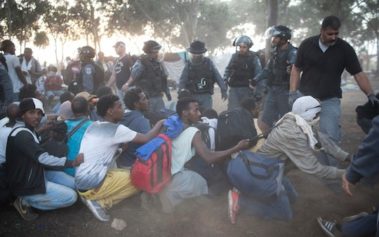
Several media outlets reported a December 2005 incident, where Egyptian riot police brutally attacked a camp of Sudanese refugees in Cairo who were protesting their treatment. In front of television cameras, at least 23 refugees were killed, and hundreds of others were injured, arrested, imprisoned or deported. There was little public protest.
Black Africans report verbal harassment and negative language, such as being called “oonga boonga” or samara [black], as well as physical attacks in the streets by the public and even by Egyptian law enforcement officials, reports Michael Curtis, writer for Gatestone Institute, a New York international policy think tank.
Blacks are being stopped for random identity checks on the basis of skin color, and have faced arbitrary roundups, he continued.
In a 2011 article on Root.com, the author reports that southern Sudanese women are routinely targets of verbal public abuse. Carloads of Arab men drive by them, hanging out of windows, shouting catcalls, or making loud demands for sexual favors.
Although Nubians are among the indigenous inhabitants of what is now considered modern Egypt, they are not spared discrimination based on skin color.
Nada Zeitoun, a Nubian filmmaker from the upper Egyptian city of Aswan, was denied service at a pharmacy in central Cairo in 2013 because the pharmacist said he “didn’t accept money from Black hands.”