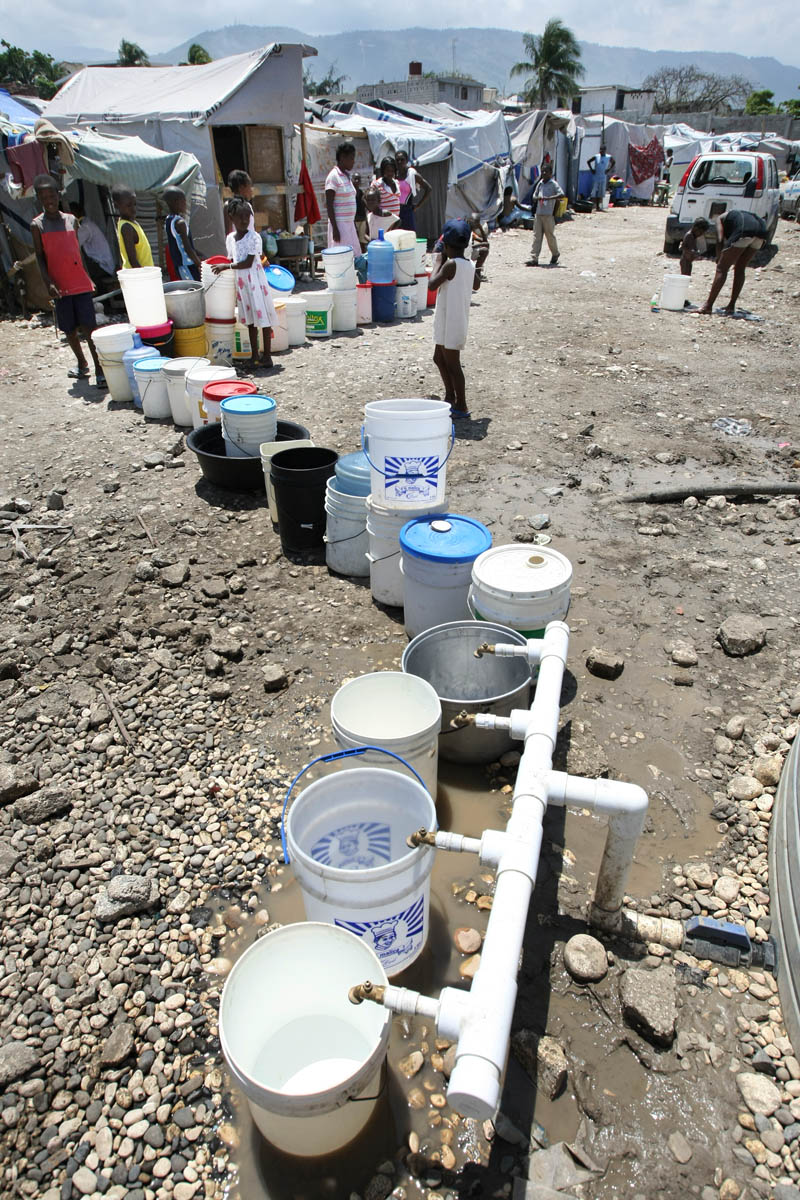
U.N. Secretary-General Ban Ki-moon visited rural Haiti on Monday to help launch a program to improve sanitation and fight the spread of cholera, a disease many Haitians blame U.N. peacekeepers for introducing to the impoverished Caribbean country.
An outbreak of the disease that followed Haiti’s devastating earthquake in 2010 has killed more than 8,500 people and sickened about 700,000. Studies have shown cholera-infected waste likely was inadvertently introduced in one of Haiti’s biggest rivers by troops from Nepal, where the disease is endemic.
The outbreak is the subject of three lawsuits in U.S. courts, including one filed this year by nearly 1,500 Haitians seeking compensation from the U.N. A previous claim by cholera victims was rejected by Ban and the U.N., citing diplomatic immunity.
At a church service in the village of Los Palmas, Ban said that he knew the cholera epidemic “caused much anger and fear” in Haiti and that the disease “continues to affect an unacceptable number of people.”
“As secretary-general of the United Nations, I want to assure you that the United Nations and its partners are strongly committed to ending the epidemic as quickly as possible,” he said.
In 2012, Ban announced a $2.2 billion initiative to help eradicate cholera in Hispaniola, the island shared by Haiti and the Dominican Republic. But the program has not attracted nearly enough foreign donors.
Ban’s visit was criticized by some in Haiti who said the U.N. must accept responsibility for introducing the disease and provide compensation to families.
“It is an insult to all Haitians for the secretary-general to come to Haiti for a photo-op, when he refuses to take responsibility for the thousands of Haitians killed and the hundreds of thousands sickened by the U.N. cholera epidemic,” said Mario Joseph, a leading lawyer for Haitian cholera victims.
Read more at abcnews.go.com