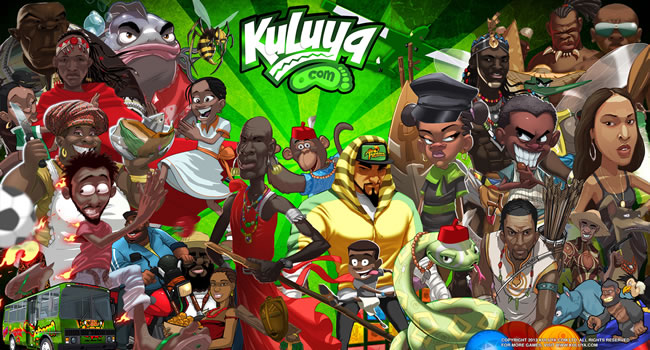
 Nigerian creator Olakunle Ogungbamila is ready to take on the challenge of making his new mobile phone game, Afro Fighters, just as popular as its predecessors Clash of Clans and Angry Birds. In order to do this, he has to deal with obstacles holding up Africa’s games development industry. Those challenges include mobile phone connections, subscriptions and surrounding infrastructure.
According to a report from tech company Ericsson, industry analysts predict that by the end of 2014, mobile telecoms in Africa will have 635 million subscribers and 930 million by the end of 2019.
However, the number of expensive smartphones that can run sophisticated games and applications is low. By the end of 2014, they will account for only 14 percent of African mobile connections.
“That is the No. 1 obstacle. It is changing rapidly though,” said Ogungbamila of Kuluya Games in an interview with Reuters. Eighty percent of Kuluya’s revenue comes from making branded mini games and apps for other companies, rather than advertisements and purchases in its own titles.
Ogungbamila would like to see more deals with telecom companies to let him process payments, more skilled developers, better and cheaper mobile broadband and, possibly, one day, more funding to make full-blown console games for the Xbox and PlayStation. Ogungbamila also would like for his customers to have bank cards and accounts that would make it easier for them to send small payments for charge-ups and extra characters in games.
In Nairobi, developer Mwaura Kirore, who owns Planet Rackus, splits his time between designing games and running an advertising company. As of right now, advertising clients get the bulk of his attention.
“I don’t think anyone in Kenya can make a living out of gaming yet. …We’re just at our infant stage in terms of what we’re doing. But we are in for the long haul.”
Planet Rackus’ game MA3Racer sends rickety minibus taxis zig-zagging across a motorway next to a park filled with lions. The first edition of MA3Racer, 2D mobile game, had more than 1 million downloads on Nokia’s Ovi platform, showing a strong demand.
On Kuluya’s website, there are just 50 titles, and the highest-ranked in the Google Play Store are Afro Fighters and Keke, popular in India where a player guides a rickshaw taxi down a dirt road.
Ghana’s Leti Arts has mobile comic strips combined with games like Africa’s Legends and Ananse: The Origin. The idea is to bring in local players with local content who are always looking for a storyline that could turn into a franchise popular enough to cross borders in Africa and beyond. The people behind the company also want to change the way Africa is portrayed in Western games.
“There are lots of African stories that haven’t been told. With Ananse, you have a very cunning character with spider-like powers from the days of ancient Africa … before Spiderman existed,” said Wesley Kirinya, Leti co-founder.