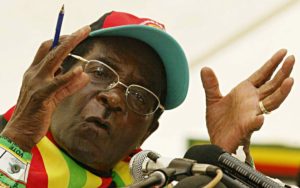
 Fourteen years after Zimbabwe President Robert Mugabe shocked many in the West by using his army to take the land of as many as 4,000 white farmers and redistribute it to Black Zimbabweans, he is demanding that the remaining 100 to 150 white farmers give up their land and “go.”
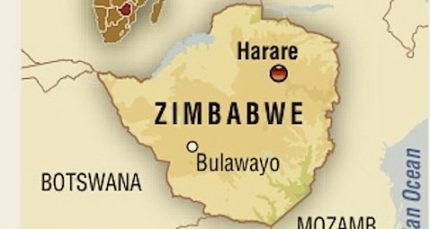
Mugabe, 90, made his demands in a speech to Black farmers at a rally in Mhangura, a small mining town about 120 miles north of the capital Harare. Mugabe, who has led the nation since independence in 1980, decreed that whites may no longer own any land in Zimbabwe. He said they would still be allowed to own businesses and urban apartments.
“I have been given a list of 35 white farmers in Mashonaland West alone,” said Mugabe, who won re-election to a fifth term last summer. “We say no to whites owning our land, and they should go. … They can own companies and apartments … but not the soil. It is ours and that message should ring loud and clear in Britain and the United States.”
Mugabe, in particular, singled out the practice of white farmers renting land from Black owners, which many of his associates have used as a way to make lucrative profits. He said it was unpatriotic.
“There are white farmers who are still on the land and have the protection of some cabinet ministers and politicians as well as traditional leaders,” he said. “That should never happen. They [whites] were living like kings and queens on our land and we chucked them out. Now we want all of it.”
Mugabe’s many critics characterized this latest declaration as his attempt to detract attention away from the country’s collapsing economy, which many say is on the verge of bankruptcy. Observers have said the seizure of the white farms is directly linked to the economic collapse because many of the Black farmers lacked farming equipment and expertise, leading to a drastic fall in agricultural production.
But Mugabe has blamed the drop in production on drought and the cumulative effect of sanctions against his country.
“Don’t be too kind to white farmers. Land is yours, not theirs,” Mugabe said at the rally. “They should get into industries and leave the land to Blacks.”
Mugabe’s perspective is considerably affected by growing up in a country where white farmers made up less than 1 percent of the population but owned 70 percent of the best farming land.
Mugabe’s family owns three farms that were taken from whites.
Commercial Farmers Union director Hendricks Olivier said the president’s speech had caused much anxiety among the remaining white farmers.
“We’d like to move forward and work with the government of the day,” he told the BBC.
Barnabas Thondlana, editor of The Observer weekly, told the Christian Science Monitor, “I strongly and vigorously denounce someone who expects me to hate someone because of the color of their skin. I think what the president is doing is out of order because the problem with our country at the moment is not whites.”
With the collapse of many banks and the government unable to pay the wages of many in the civil sector, Thondlana called for the nation to focus on the real problems.
“The problems with our country at the moment are dictatorship, [bad] governance, corruption, kleptocracy and other, all forms of prejudices,” he said. “We should be fighting these prejudices like tribalism, regionalism and racism. I say no to racism.”