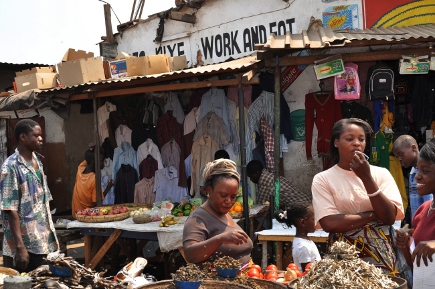
 The African continent is booming with entrepreneurs starting businesses of every size and type. At a roundtable discussion held by the Guardian and sponsored by Barclays, senior representatives of business, academia, NGOs and the financial sector discussed entrepreneurship in Africa and the challenges many young entrepreneurs face.
The lack of livelihoods for young people in Africa was considered one of the world’s most significant challenges, according to David Bull of the United Nations International Children’s Emergency. “A quarter of young people are out of work and education,” he said. “This is both a waste and dangerous. If they have nothing constructive to do, they are at risk of drugs, gangs and radicalism with an impact on themselves and society.”
To combat this problem, The Building Young Futures project, run by UNICEF and Barclays, is targeting 74, 000 young people in six countries, working with governments and other organizations, to provide them with the skills and confidence to start their own businesses. The Barclays staff in those countries will act as mentors.
Greg Fischer of the London School of Economics believes that it’s not about training those who live in poverty and have low skills.
“There has never been a history of any country developing, where it is about low-skilled people starting a business,” said Fischer. ” Entrepreneurship is about highly skilled people.”
Michael Hastings of KPMG spoke about the very high interest rates that he feels is the single most significant systemic reason that entrepreneurship was not developing in Africa.
“The banking interest rate for businesses is 26-29 percent on average,” he said. “The continent is flush with opportunity, with ideas, it is highly educated, there’s a consumer boom, opportunities galore, infrastructure, investment from China, but a person wanting to expand from selling eggs to selling meringues to British supermarkets can’t get the investment capital they need. That is a systemic failure.”
Emphasizing the importance of entrepreneurism for the poverty-stricken, Bull reiterated, “That is where we make the absolutely biggest difference in terms of infant mortality, education and so on. We can’t wait 20 years for economic growth to happen.”
Winifred Adeyemi of Africa: Seen and Heard, spoke on the large number of highly educated African graduates who are un- or underemployed or had to work outside of the continent because they weren’t able to find jobs that used their skills.
Adeyemi wants to match graduates with human resource departments: “Then we would find a lot of leadership that is lacking could be created within the countries. It is important to create and incubate the potential leaders of the future,” she said.
Richard Phelps from Barclays added, “This is a huge opportunity. We are all doing our bit. If we can all come together, it will be a major step forward.”