Ancient Nubia (4500 B.C. – 500 A.D.)
Ancient Nubia, also known as Kush, was a region along the Nile River, located in northern Sudan and southern Egypt. It was home to some of Africa’s earliest kingdoms. Known for rich deposits of gold, Nubia was a major trading port for luxury goods that came from sub-Saharan Africa, such as incense, ivory, and ebony.
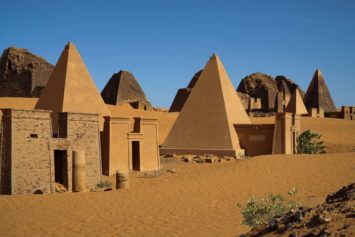
The first monarchy of recorded history was established in Nubia. The Nubians were also known for their exceptional archery skills that provided the military strength for their rulers. Kings of Nubia ultimately conquered and ruled Egypt for about a century. Monuments still stand—in modern Egypt and Sudan—at the sites where Nubian rulers built cities, temples and royal pyramids.
In the 1800s, the Western world’s interest in Nubia was awakened by the rediscovery of the ancient empire’s monuments, which were reported almost simultaneously by individual British, French and American explorers. Many of them found it difficult to credit indigenous Africans for building such a civilization.
During the 1840s, German Egyptologist, Karl Richard Lepsius (1810-1884) asserted confidently that the Greek term “Ethiopian,” when referring to the ancient civilized people of Kush, did not apply to “negroes,” but was used to describe reddish-skinned people closely related to the Egyptians, who “belonged to the Caucasian race.”
Again, in 1852, when the American diplomat Bayard Taylor (1825-1878) visited Sudan and gazed upon the temple carvings of gods and rulers with clearly African features, he also found it inconceivable that they could have been created by black-skinned Africans. Rather, he asserted, echoing Lepsius, they must have been created by Egyptians or immigrants from India or Arabia, or an “offshoot” of the white race.