From racially biased Army regulations to a crackdown on school dress codes, it seems as if there is an unspoken rule that suggests a Black woman’s natural hair is not beautiful, professional or acceptable.
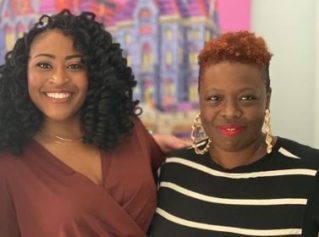
Image activist Michaela Angela Davis and Curly Hair Collective co-founder Gia Lowe recently sat down with HuffPost Live to discuss the obstacles that Black women are facing simply because they want to embrace their natural hair.
Back in April, female lawmakers sent a letter to Defense Secretary Chuck Hagel slamming the discriminatory hairstyle regulations for women in the Army.
The hairstyles put strict regulations on twists, braids and other hairstyles that are typically used on African-American hair.
In December 2013, a 12-year-old girl was sent home from school after administrators made it clear they wanted her to either straighten her natural hair or cut it.
Administrators claimed her natural hair was a distraction to other students.
Lowe explained that much like the Army’s hairstyle ban and the private school’s decision to send home a young girl with natural hair, corporate America also tends to shy away from African-American women who embrace their hair in its natural state.
She recalled a time that she was transitioning from relaxed hair to natural hair, only to find that her supervisors and co-workers found the style to be unprofessional.
“I was in a completely corporate setting and I remember it being so much a focal point of conversation, even in an introduction to a client once,” Lowe said during her appearance on HuffPost Live. “It was ‘Hey, this is Gia [Lowe] and she’s doing something with her hair.’ ”
 Lowe then said that she wondered why it needed to be explained that she was “doing something with her hair,” simply because it was not relaxed or straight.
“It felt like he needed to explain that I had broken a rule,” Lowe said, when asked how she felt about the introduction.
She added that despite the unspoken rules that tend to fight back against Black women’s hair, more women are embracing their natural hair.
According to Lowe, Black women are seeking out information about going natural and styling their natural hair.
Now, she says, is the time to keep it up and continue “feeding and nurturing” women who are ready to embrace their natural hair.
“Our hair defies gravity,” Lowe said as she explained the beauty of natural hair. “It is the bigger the hair the closer to God.”