 For most office workers, lunch hour is a practically sacred time — the workday’s lone opportunity to run a midday errand or get away from the desk. But for one Chicago-area woman, lunch hour takes on a much deeper meaning.
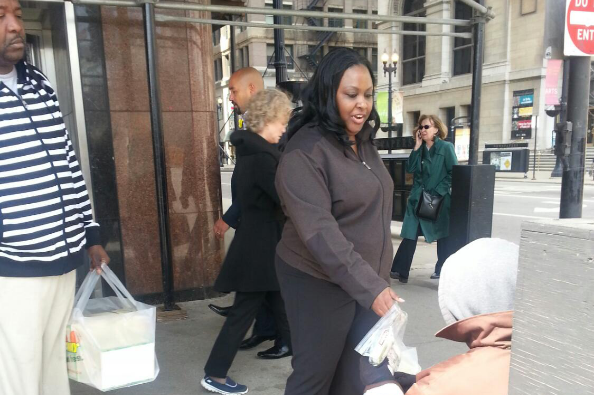
Every Thursday, Kasonja Holley heads to a sandwich shop near her workplace and purchases 20 boxed lunches that she distributes to homeless people near her office. Her coworkers coined the project, which began two years ago, “Love in Motion.”
Holley’s project was featured on WGN host Marcus Leshock’s Mr Brightside segment on Friday.
“I knew I needed to be doing something,” she explained to WGN. “I like to feed people so I figured I might as well start there.”
Holley also distributes kits of toiletries — toothpaste, toothbrushes, soap, toilet paper — along with the lunches, and some of her coworkers also join her to distribute the goods.
To help fund the project, she works a part-time job as a suite attendant at the United Center, in addition to her full-time job. She launched a GoFundMe campaign last fall to help cover her costs. In the three days since the WGN segment aired, she has raised over $4,800 in donations toward a $6,240 goal — the approximate cost of buying the box lunches for one year.
In a message posted to her GoFundMe page, Holley wrote that her faith helped inspire the project in the first place. On the page, she quotes a verse from the Bible — “Share with God’s people who are in need. Practice hospitality.” (Romans 12:13) — in explaining her mission.
“I don’t look for any reward,” she told WGN. “I just do it because it’s a good thing to do. That’s it.”
Source: huffingtonpost.com