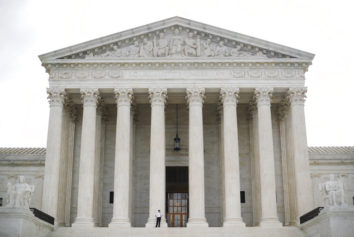
The United States Supreme Court has ruled that children of Caribbean immigrants who lost their places in the slow-moving immigration system because they turned 21 before their parents received their immigrant visa could not be given special priority.
“Whatever Congress might have meant, it failed to speak clearly,” wrote Justice Elena Kagan for the majority in the 5-4 decision on Monday, referring to the 2002 law that permits “aged-out” children to hold on to their child status, or their initial “priority date” for consideration in the immigration system after they turn 21.
“The two faces of the statute do not easily cohere with each other,” she added in her 33-page opinion.
Kagan also wrote that an administrative immigration tribunal’s 2008 interpretation of the 2002 law “benefits from administrative simplicity and fits with immigration law’s basic first-come, first-served rule”.
By contrast, she said the solutions suggested by the immigrants who were respondents in the case “would scramble the priority order Congress established, by permitting “aged-out” children to be considered ahead of other would-be immigrants on the path to citizenship.
“We still see no way to apply the concept of automatic conversion to the respondents’ children and others like them,” wrote Kagan, adding that courts had to defer “to the board’s (immigration) expert judgement about which interpretation fits best with, and makes most sense of, the statutory scheme.”
The decision could affect untold numbers of young immigrants across the country, including the children of New York City teachers recruited to fill classroom vacancies in the late 1990s and early 2000s, who have “aged out” of the immigration system, according to the New York Times.
Read the full story at jamaicaobserver.com