The Number of People Enslaved
The number of people enslaved by Muslims has been a hotly debated topic, especially when the millions of Africans forced from their homelands are considered.
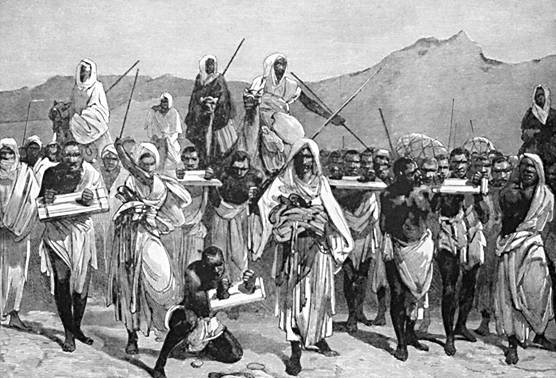
Some historians estimate that between A.D. 650 and 1900, 10 million to 20 million people were enslaved by Arab slave traders. Others believe over 20 million enslaved Africans alone had been delivered through the trans-Saharan route alone to the Islamic world. Dr. John Alembellah Azumah estimates in his 2001 book “The Legacy of Arab-Islam in Africa” that over 80 million more Black people died over that route.
Arab Enslavers Practiced Genetic Warfare
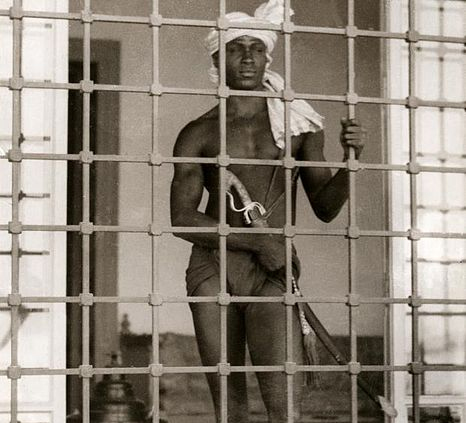
The Arab slave trade typically dealt in the sale of castrated male slaves. Black boys between the age of 8 and 12 had their scrotums and penises completely amputated to prevent them from reproducing. About six of every 10 boys bled to death during the procedure, according to some sources, but the high price brought by eunuchs on the market made the practice profitable.
Some men were castrated to be eunuchs in domestic service, and the practice of neutering male slaves was not limited to only Black males. “The calipha in Baghdad at the beginning of the 10th Century had 7,000 black eunuchs and 4,000 white eunuchs in his palace,” writes author Ronald Segal in his 2002 book “Islam’s Black Slaves: The Other Black Diaspora.”