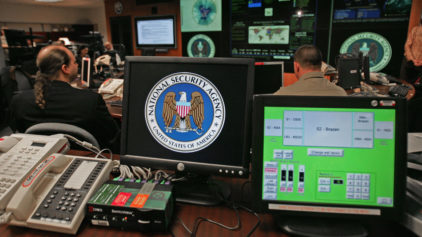
The National Security Agency (NSA) isn’t limiting itself to telephone metadata and email communications. The agency is building a massive database of photos as part of a facial recognition projection to track and identify targets, reports The New York Times. Millions of images are collected per day, according to documents obtained by NSA whistleblower Edward Snowden, with some 55,000 of “facial recognition quality.”
One presentation explaining the program says, “It’s not just the traditional communications we’re after: It’s taking a full-arsenal approach that digitally exploits the clues a target leaves behind in their regular activities on the net to compile biographic and biometric information” to “implement precision targeting.” Images are likely harvested from social media sites such as Facebook as well as from private communications captured by the NSA. But the latter would require court approval if domestic communications were targeted.
An NSA spokeswoman tells The New York Times that “we would not be doing our job if we didn’t seek ways to continuously improve the precision of signals intelligence activities — aiming to counteract the efforts of valid foreign intelligence targets to disguise themselves or conceal plans to harm the United States and its allies.” She says that the agency cannot access state driver’s license databases or U.S. passport images. She added that the image collection was separate from the agency’s bulk collection of metadata.
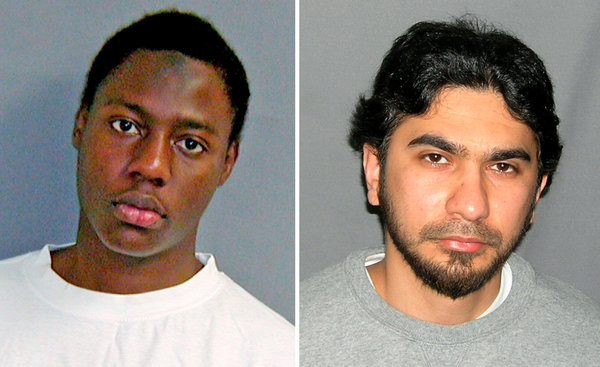
Databases of images can be used to identify and track subjects — if the facial recognition technology is advanced enough. According to the Times, presentations show how the technology could match two photos of the same man, one bearded and the other not. Other technology has been used to analyze the backgrounds of photos to identify their locations against satellite imagery. But facial recognition technology is widely thought to need significantly more work. Images taken from an angle, for example, are difficult to identify. The NSA’s efforts here are not unique: other agencies like the FBI and State Department have massive image databases, and private firms are working on advancing facial recognition technologies.
source: theverge.com