6 Children of Civil Rights Leaders Who Are Creating Their Own Legacies

While the forefathers who shepherded us through a tumultuous period of human and civil rights were changing the nation to be more suitable for their descendants, those same children were being raised to leave their own indelible impression on the world.

Here are six children, that you may not know spawned from civil rights leaders, who are creating their own legacies.

 Attallah Shabazz

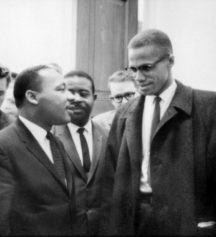
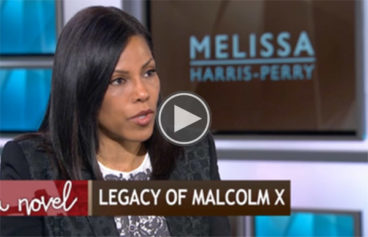
Attallah Shabazz, 56, of New York, is one of six children of leader Malcolm X (1925-1965) and wife Betty Shabazz (1934-1997). She was 6 years old when her father was assassinated in the Audubon Ballroom in Harlem.

Admittedly, she remembers that day, but what she holds on to for comfort is her father teaching her the importance of her own voice.

Shabazz realized she has her father’s oration skills during a speaking engagement in Panama in 1979,

“I don’t remember much of what I said, but it must have been OK, because when I sat down a Panamanian official leaned over and whispered approvingly, ‘You’re going to be just like him,’ she said. This jolted me into realizing that people are not going to let me forget who I am.”

She didn’t feel overwhelmed by this calling, however, she felt illuminated by it,

“I am not under a shadow,” she said.  “I’m under a light.”

Attallah has chosen to let her light shine both academically and artistically to preserve the values of education and self-actualization that her father faithfully preached.  She is an actress, theatrical director, producer and lecturer.

Still independent.

We hope this story was worth your time. For over 14 years, Atlanta Black Star has stayed Black-owned and independently run. We didn't get here by waiting on ad budgets that were never built to prioritize us. Our readers did that.

Corporate support for Black media has always been thin. Outlets like ours get roughly 1% of the $170 billion spent on U.S. advertising each year, and that margin is shrinking further as advertisers walk back the DEI-linked commitments they made in 2020. That's the backdrop. It's not why we're asking.

The wider picture isn't any steadier. Newspaper ad revenue has fallen more than 80% since 2005, and local newsrooms are closing at a rate of roughly two a week nationwide. When outlets go under, it's rarely the ones built to center a Black perspective from the ground up that get to stick around.

We know a request for support isn't why you came here. But without readers choosing to fund this work directly, the depth of reporting we can do at home and abroad shrinks along with everyone else's. If you're not in a position to give, that doesn't change how much we value you as a reader.

If you are able to, a recurring contribution does more for us than a single one-time gift, because it lets us plan the next investigation instead of just the next invoice. It takes about 30 seconds, no long form, no account. Thank you for continuing to support independent journalism and freedom of the press.

Back to top