At the opening of the Law Term last September, Trinidadian Chief Justice Ivor Archie suggested that the decriminalization of possession of small amounts of marijuana was one panacea that could be used to reduce the current backlog in the criminal justice system.
The suggestion unleashed a fiery debate.
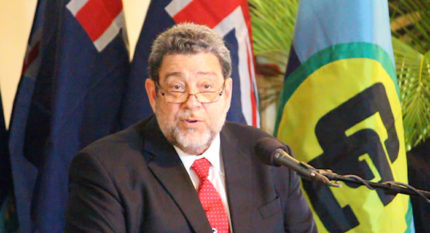
Also last year, St. Vincent and the Grenadines Prime Minister Dr. Ralph Gonsalves urged his regional colleagues to discuss the issue of decriminalizing marijuana, since the United States had taken similar steps.
Yesterday, the issue of the decriminalization of marijuana for medicinal purposes came up at the Caribbean Community (CARICOM) Inter-Sessional meeting that began in St. Vincent.
Medical practitioners shared their sentiments on the effects of decriminalization.
Medical researcher and professor of of Experimental Medicine at the St. Augustine Campus of University of the West Indies, David Picou, said: “I think they should decriminalize marijuana. I don’t agree with legalizing it. It is an offense to use small amounts of marijuana for medicinal purposes. I don’t think people should be able to grow marijuana, process it and sell it to anybody. There are reports of some medicinal uses for people who have pain. Cannabis drops help with the eyes. It is used in ophthalmology.”
Picou also made reference to a study that was undertaken by the late psychiatrist Dr Michael Beaubrun while he was in Jamaica at UWI. He said: “The people were warded at Tropical Metabolism Research Unit. They stayed there a few days while tests were conducted on them. There were no major adverse findings following years of smoking marijuana. It is one of the few studies . He studied chronic smokers of marijuana and several tests were done on them. He did not find the evidence of any adverse effects among chronic marijuana smokers. But no one seems to have ever taken it on seriously.”
Orthopedic surgeon Dr. David Toby said: “I think it should be decriminalized because there are aspects of marijuana which are helpful to the patient. There are different types which are less hallucinatory. There are types which are more helpful for certain ophthalmological diseases. There are people who are helped by marijuana. They should target those people so they don’t have to hide and run away.
“There should be proper records and proper documentation. If it’s followed properly, everybody won’t be able to go to the shop and buy it. They will have to have a reason and permission for use. It should not be an “over the counter” drug. In the same way, you can’t go “over the counter” for antibiotics. You need a prescription from a qualified doctor.”
The website EyeCareAmerica states that marijuana has been used to lower intraocular pressure (IOP) in patients with primary open-angle glaucoma.
Dr. Dianne Douglas, a clinical psychologist, said: “It should not be decriminalized. It slows down your responses and slows you down quite a bit. You can’t always be as sharp in your intentions and in your discernment. Marijuana destroys brain cells which cannot be reproduced. Even though it may not have the same potency as cocaine, over time it does cause you to deteriorate. I would like to see a combination of penalty and rehabilitation.”
Read the full story at trinidadexpress.com