
6 Common Misconceptions About the Enslavement of African People

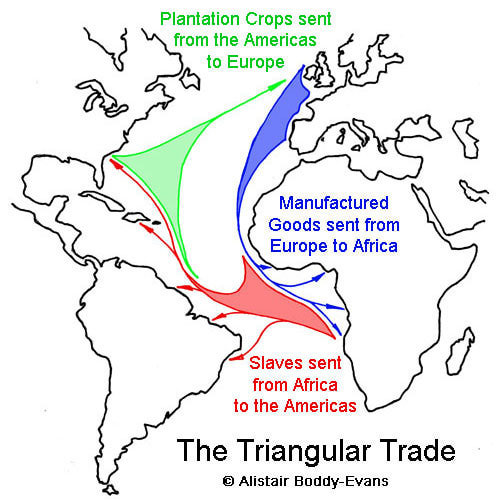
slave triangular trade route

Where the Trans-Atlantic Slave Trade Began

The men, women and children needed to fuel the trans-Atlantic slave trade were initially snatched from their lives in Senegambia (Senegal and The Gambia) and the Windward Coast. Around 1650, slave traders moved their operations to West-Central Africa (the Kingdom of the Kongo and neighboring Angola).

According to author Alistair Boddy-Evans, the triangular slave trade – named for the rough shape it makes on a map – occurred in three stages.

“The first stage of the triangular trade involved taking manufactured goods from Europe to Africa: cloth, spirit, tobacco, beads, cowrie shells, metal goods, and guns. The guns were used to help expand empires and, ultimately, obtain more captured Africans (until they were finally used against European colonizers). These goods were exchanged for captured Africans.

The second stage of the triangular trade (the middle passage) involved shipping the captives to the Americas for enslavement.

The third, and final stage of the triangular trade involved the return to Europe of the produce of the slave-labor plantations: cotton, sugar, tobacco, molasses and rum.”

Subscribe To The ABS Newsletter — Get our stories in your inbox.

Independent journalism still matters.

We hope this story was worth your time. For over 14 years, Atlanta Black Star has stayed Black-owned and independently run. We didn't get here by waiting on ad budgets that were never built to prioritize us. Our readers did that.

Corporate support for Black media has always been thin. Outlets like ours get roughly 1% of the $170 billion spent on U.S. advertising each year, and that margin is shrinking further as advertisers walk back the DEI-linked commitments they made in 2020. That's the backdrop. It's not why we're asking.

The wider picture isn't any steadier. Newspaper ad revenue has fallen more than 80% since 2005, and local newsrooms are closing at a rate of roughly two a week nationwide. When outlets go under, it's rarely the ones built to center a Black perspective from the ground up that get to stick around.

We know a request for support isn't why you came here. But without readers choosing to fund this work directly, the depth of reporting we can do at home and abroad shrinks along with everyone else's. If you're not in a position to give, that doesn't change how much we value you as a reader.

If you are able to, a recurring contribution does more for us than a single one-time gift, because it lets us plan the next investigation instead of just the next invoice. It takes about 30 seconds, no long form, no account. Thank you for continuing to support independent journalism and freedom of the press.

Latest from Atlanta Black Star

Back to top