Angola
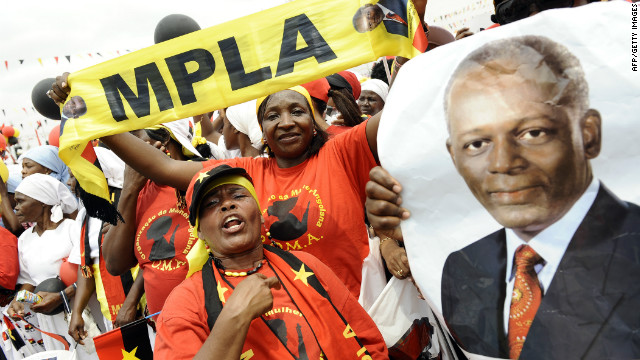
Angola gained its independence from Portugal in November 1975, but the struggle was far from over. Following the Angolan War of Independence (1961–1974) that preceded the country’s independence, a civil war between two former liberation movement parties began. The National Union for the Total Independence of Angola (UNITA) led by Jonas Savimbi, and the Popular Movement for the Liberation of Angola (MPLA) led by Agostinho Neto, fought during the war of independence and continued their power struggle.
Beginning in 1975, the CIA allegedly participated in the Angolan civil war by hiring and training American, British, French and Portuguese private military contractors, as well as training the South African-based army UNITA, to fight against the Cuban-backed MPLA.
One year later, the Clark Amendment prohibited U.S. assistance to the UNITA, however, according to author Joel Bainerman in “Inside the Covert Operations of the CIA & Israel’s Mossad,” the support continued in different ways.
“Sam Bameih, a U.S. businessman of Arab descent, told congressional investigating committees that he was asked by the Saudi government in 1983 to help channel more than $50 million to UNITA as part of the AWACS (Airborne Warning And Control System) deal. He claimed William Casey (director of CIA) personally solicited the aid. In May 1986, African Report noted that since 1982, the U.S government had supplied UNITA with weapons through intermediaries.”
Savimbi was publicly lauded by sitting President Ronald Reagan, who invited him to the White House. Following the meeting, Reagan spoke of UNITA winning “a victory that electrifies the world.” Savimbi also met with Reagan’s successor, George H. W. Bush, who promised him “all appropriate and effective assistance,” according to a 1989 New York Times article.
The civil war ended in 2002 after Savimbi was killed. Angola remains deeply divided politically between MPLA and UNITA supporters.