
10 Reasons African-Americans Should Invest in Africa

africagrowthrate

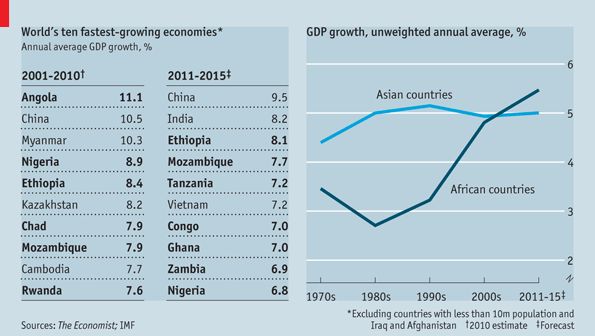
4. Strong growth expectations According to projections from the World Bank, nine of the 15 countries in the world with the highest rate of five-year economic growth are in Africa. Experts estimate that Africa is likely to grow by 4.7 percent over the next five years. Economists expect much slower growth in places like the United States and U.K. over the next few years.
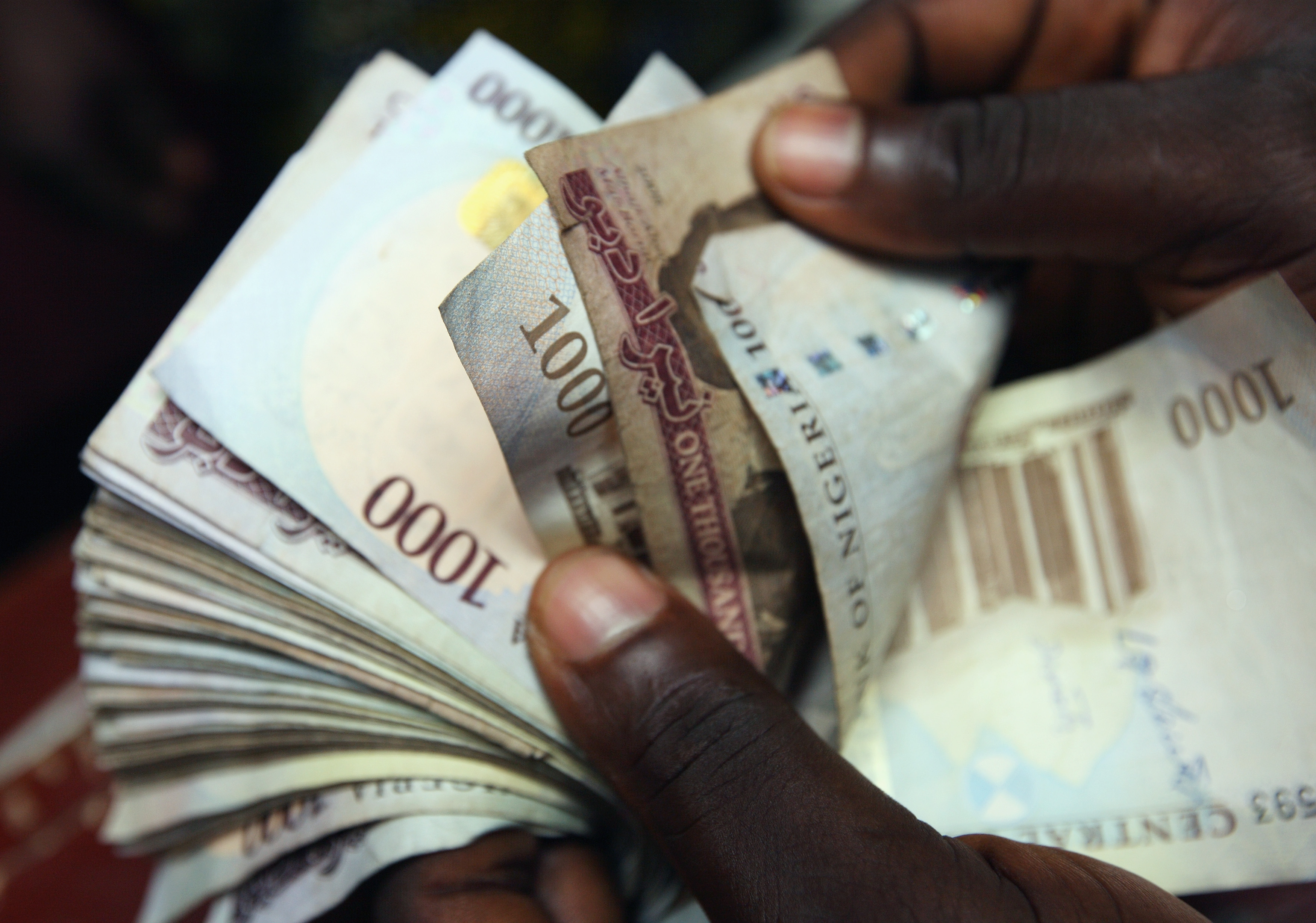
Nigerian Workers Construct Petrol Tankers

5. Profitable companiesThere are a number of well-known companies that are based in Africa, including South African Breweries and telecom company MTN. Africa’s total stock market capitalization now exceeds $1 trillion. A past study by two economists, Paul Collier and Jean-Louis Warnholz, found that from 2002 to 2007, the average annual return on capital of African companies was 65 percent to 70 percent higher than that of comparable companies in China, India, Indonesia, and Vietnam. That means the African companies were more profitable.

Africa also features about 10 stock exchanges, according to bizcommunity.com. The market capital has risen from $5.5 billion in 1988 to $569 billion in 2005 (excluding South Africa). In addition, small investors are able to access Africa’s growth potential through the T. Rowe Price Africa and Middle East Fund (nasdaq: TRAMX), launched in September 2007. The SPDR S&P Emerging Middle East & Africa (nyse: GAF) exchange-traded fund is another option, according to John H. Christy’s commentary on Forbes.com.

Subscribe To The ABS Newsletter — Get our stories in your inbox.

Independent journalism still matters.

We hope this story was worth your time. For over 14 years, Atlanta Black Star has stayed Black-owned and independently run. We didn't get here by waiting on ad budgets that were never built to prioritize us. Our readers did that.

Corporate support for Black media has always been thin. Outlets like ours get roughly 1% of the $170 billion spent on U.S. advertising each year, and that margin is shrinking further as advertisers walk back the DEI-linked commitments they made in 2020. That's the backdrop. It's not why we're asking.

The wider picture isn't any steadier. Newspaper ad revenue has fallen more than 80% since 2005, and local newsrooms are closing at a rate of roughly two a week nationwide. When outlets go under, it's rarely the ones built to center a Black perspective from the ground up that get to stick around.

We know a request for support isn't why you came here. But without readers choosing to fund this work directly, the depth of reporting we can do at home and abroad shrinks along with everyone else's. If you're not in a position to give, that doesn't change how much we value you as a reader.

If you are able to, a recurring contribution does more for us than a single one-time gift, because it lets us plan the next investigation instead of just the next invoice. It takes about 30 seconds, no long form, no account. Thank you for continuing to support independent journalism and freedom of the press.

Latest from Atlanta Black Star

Back to top