 New York Sen. Charles E. Schumer has proposed a new law in memory of the autistic teen, whose remains were found in a river after he wandered away from school, that will better keep track of children with autism and prevent future wandering incidents.
“Avonte’s Law” would provide funding for a program that gives free electronic tracking devices to parents of autistic children.
Wandering is extremely common amongst autistic children who are overwhelmed by their surroundings. Unfortunately, however, these wandering incidents often lead to tragedy.
“Avonte’s running away was not an isolated incident,” Schumer said at a new conference on Sunday. “This is a high-tech solution to an age-old problem.”
The high-tech solution is a small tracking device that can be sewn into clothes or worn as a watch, allowing parents to locate their children should they ever wander off.
“Thousands of families face the awful reality each and every day that their child with autism may run away,” Schumer added. “Making voluntary tracking devices available will help put parents at ease, and most importantly, help prevent future tragedies like Avonte’s.”
The proposal recommends that a $10 million fund be designated to get the program started and that individual communities would have the right to decide if they want to be a part of the program.
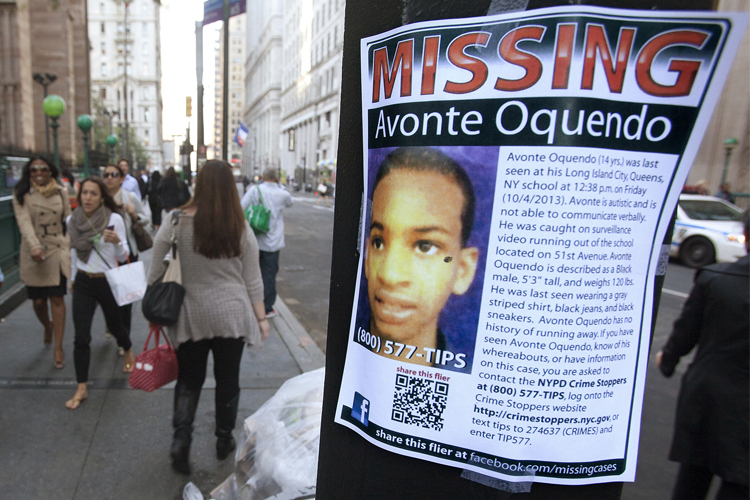 “It will be up to local law enforcement agencies to apply to get funding in order to bring these tracking devices to their communities,” a spokesperson for Schumer said.
According to the Chief of Child Psychiatry at Yale University Fred Volkmar, there is one serious flaw with this plan – autistic children don’t like wearing wristbands or watches.
“They don’t like to wear things; that’s a hurdle to get through,” Volkmar said. “They have sensory issues. That’s part of the challenge.”
Johanna Miller, advocacy director at the New York Civil Liberties Union, stressed that the real solution is education on autism and keeping adults in the community informed.
“School safety officers do not have any knowledge of whether a student has an IEP (Individualized Education Plan),” Miller said. “We don’t advocate that the Department of Education shares these records with the cops, but there’s a gap in how the adults in the building can protect students with special education needs.”
The guard who saw Oquendo leaving the school property said she thought he was just a regular kid, and therefore did not see an issue with him wandering off.
“There is no medicine to relieve the pain from the loss of a child,” Schumer said. “However, Avonte’s Law will make sure that this grave loss and the pain it has wrought will not be in vain.”
The proposed “Avonte’s Law” will also expand protections for patients with Alzheimer’s disease and make the new technology available for their caregivers as well.