
9 Black Business Leaders of Billion-Dollar Operations You Probably Don’t Know

Reginald-F-Lewis

Reginald F. Lewis — TLC Beatrice 

Reginald F. Lewis was an American businessman, who was one of the most successful business leaders during the 1980s. He was also the richest African-American man in the 1980s.

Born in Baltimore, he grew up in a middle-class neighborhood. He won a football scholarship to Virginia State College, graduating with a degree in economics in 1965. He graduated from Harvard Law School in 1968 and was a member of Kappa Alpha Psi. In 1992, Forbes listed Lewis among the 400 richest Americans, with a net worth estimated at $400 million.

Lewis died in 1993 and TLC has since been acquired, but he was one the most prominent Black business leaders of  his time  and the first African-American to build a billion-dollar company.
Kase-LawalKase Lawal — CAMAC

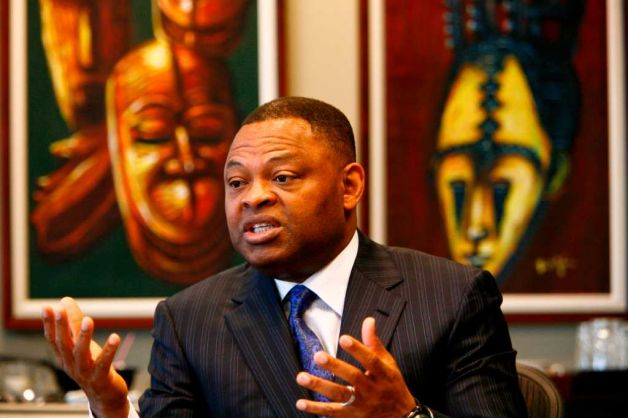
In 1986, the Nigerian-born chairman and CEO of CAMAC founded his company, which now has an annual revenue of about $1.5 billion, to explore, develop and operate oil properties. Lawal has a bachelor’s degree in chemical engineering and an MBA and he worked as a chemist and a chemical engineer prior to starting CAMAC in Houston. He was awarded an honorary doctorate in philosophy from Fort Valley (Georgia) State University and an honorary doctorate in humane letters from Texas Southern University.

As chairman and chief executive officer of CAMAC International Corporation, Lawal has led a diverse group of affiliated companies that comprise the second largest African-American-owned corporation in the United States.

Subscribe To The ABS Newsletter — Get our stories in your inbox.

Independent journalism still matters.

We hope this story was worth your time. For over 14 years, Atlanta Black Star has stayed Black-owned and independently run. We didn't get here by waiting on ad budgets that were never built to prioritize us. Our readers did that.

Corporate support for Black media has always been thin. Outlets like ours get roughly 1% of the $170 billion spent on U.S. advertising each year, and that margin is shrinking further as advertisers walk back the DEI-linked commitments they made in 2020. That's the backdrop. It's not why we're asking.

The wider picture isn't any steadier. Newspaper ad revenue has fallen more than 80% since 2005, and local newsrooms are closing at a rate of roughly two a week nationwide. When outlets go under, it's rarely the ones built to center a Black perspective from the ground up that get to stick around.

We know a request for support isn't why you came here. But without readers choosing to fund this work directly, the depth of reporting we can do at home and abroad shrinks along with everyone else's. If you're not in a position to give, that doesn't change how much we value you as a reader.

If you are able to, a recurring contribution does more for us than a single one-time gift, because it lets us plan the next investigation instead of just the next invoice. It takes about 30 seconds, no long form, no account. Thank you for continuing to support independent journalism and freedom of the press.

Latest from Atlanta Black Star

Back to top