
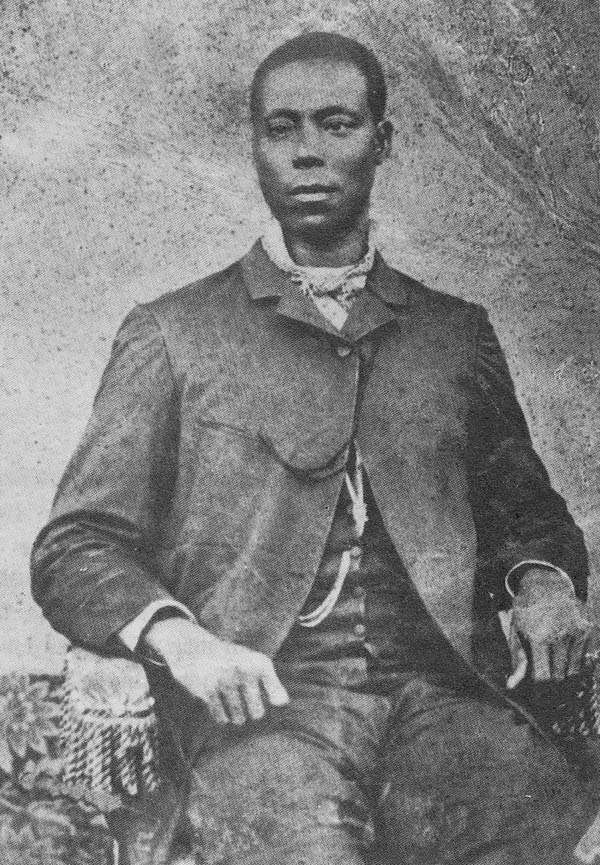
Paul Bogle
As conditions for Black people became unbearable in Jamaica, Paul Bogle, the leader of the 1865 Morant Bay Uprising, started an initiative to fight the white colonial British government for justice and fair treatment.
The seeds for the Morant Bay Uprising were sown on Oct. 7, 1865, when Bogle and his supporters attended a trial for a Black man who was imprisoned for trespassing on a long-abandoned plantation. At the court, one member of Bogle’s group protested the unjust trial and he was immediately arrested, angering the crowd further. He was rescued moments later, when Bogle and his men took to the market square and retaliated, severely beating the police and forcing them to retreat.
Two days later, warrants were issued against Bogle and a number of his men for rioting and assault. The police arrived at Bogle’s community to arrest them, but were met with stiff resistance from the men and again, the police were forced to retreat to Morant Bay.
On Oct. 11, Bogle and his followers decided not to wait for the police to return but armed themselves and went to the Court House in Morant Bay. The authorities were shaken, and fired into the crowd, killing seven people. Bogle and his men retaliated, by setting fire to the Court House and nearby buildings. As several white officials and militia tried to leave the burning buildings, Bogle and his followers killed them and took control of the town. In the days that followed as many as 2,000 of Bogle’s men roamed the countryside, killing white farm owners and forcing others to flee for their lives.